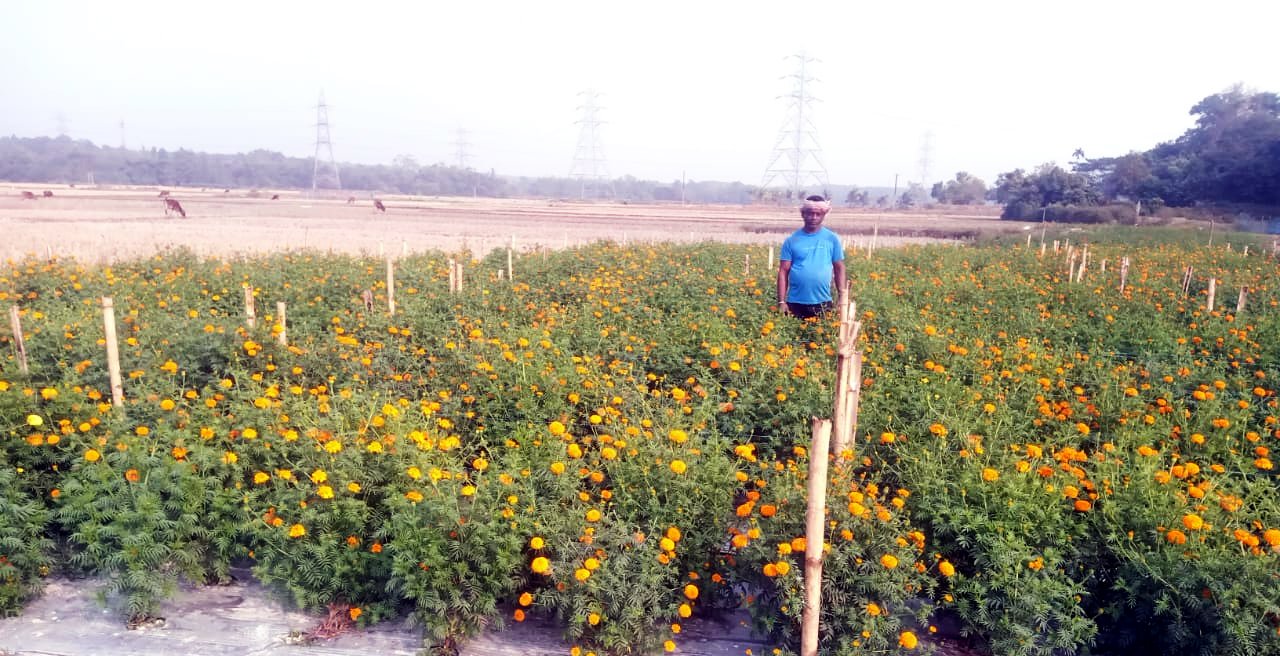
Agartala, December 25, 2025: A small agrarian village near Bishalgarh in Tripura has witnessed a remarkable transformation in just over a year, thanks to an innovative push towards flower cultivation. Champamura, once struggling with declining interest in traditional farming, is now emerging as a hub of prosperity and tourism.
In early 2024, the Bishalgarh Agriculture Office under the ATMA project organized the first awareness and training workshop on flower cultivation. The event brought together 50 farmers, village leaders, panchayat members, district agriculture committee representatives, horticulture officers, and local service workers. For a community that had nearly turned away from farming, the workshop ignited new hope.
Later that year, 14 farmers began cultivating marigolds on two hectares of land, supported by ₹80,000 in financial aid and technical training from the Agriculture Department. As word spread, buyers from Agartala started visiting Champamura directly, marking the beginning of a new journey for the village.
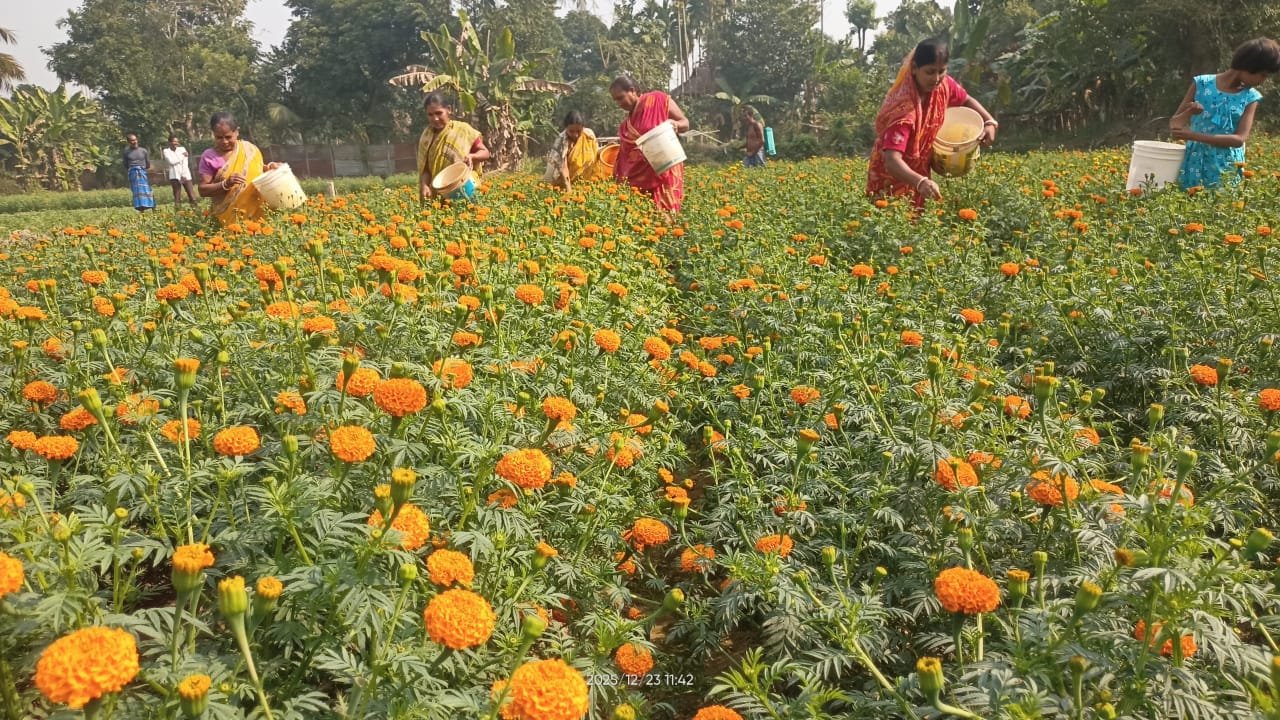
Encouraged by the initial success of flower cultivation, more farmers in Champamura expressed interest in taking up commercial floriculture. In response, the Agriculture Department rolled out several supportive projects. Under the RAD-NMSA scheme, ₹7.5 lakh was sanctioned for livestock support, while the National Mission on Natural Farming provided a grant of ₹2.5 lakh. Farmers also received subsidies worth over ₹25 lakh for modern equipment such as sprayers, mini tractors, and paddy harvesters. To diversify cultivation, ₹1.25 lakh was allocated for polyhouse vegetable farming, and nine farmers were each given drip irrigation facilities valued at ₹1.5 lakh. A greenhouse worth ₹5 lakh was introduced for gerbera cultivation, alongside ₹10 lakh in aid for paddy, millet, sesame, and pulses. Additionally, a bio-resource center and “Krishi Sakhi” were established under natural farming initiatives. Within just 18 months, these measures dramatically reshaped Champamura’s agricultural landscape, turning the village into a model of rural revival.
By 2025, flower cultivation had expanded to nearly 15 plots, with marigolds, gerberas, and other varieties grown year-round. Farmers reported earning ₹5,000–₹7,000 per week from just half a kani (approx. 0.2 acres) of marigold cultivation. During peak demand seasons—summer and Durga Puja—prices rose sharply, with marigolds selling for ₹1 per flower.
Currently, Champamura supplies 10,000–15,000 flowers daily to Agartala markets. September–October remains the most profitable period, as demand surges ahead of festive celebrations.
In 2025, 45 farmers cultivated marigolds across four hectares, each receiving ₹4,000 per kani in financial assistance. The success has not only revived farming in the village but also positioned Champamura as a growing contributor to the rural economy and floriculture trade.
With global demand for flowers rising alongside changing social customs and aesthetic preferences, Champamura’s story reflects how innovation and government support can reshape rural livelihoods.
From subsistence farming to flourishing floriculture, Champamura has bloomed into prosperity—spreading the fragrance of economic growth across Tripura.