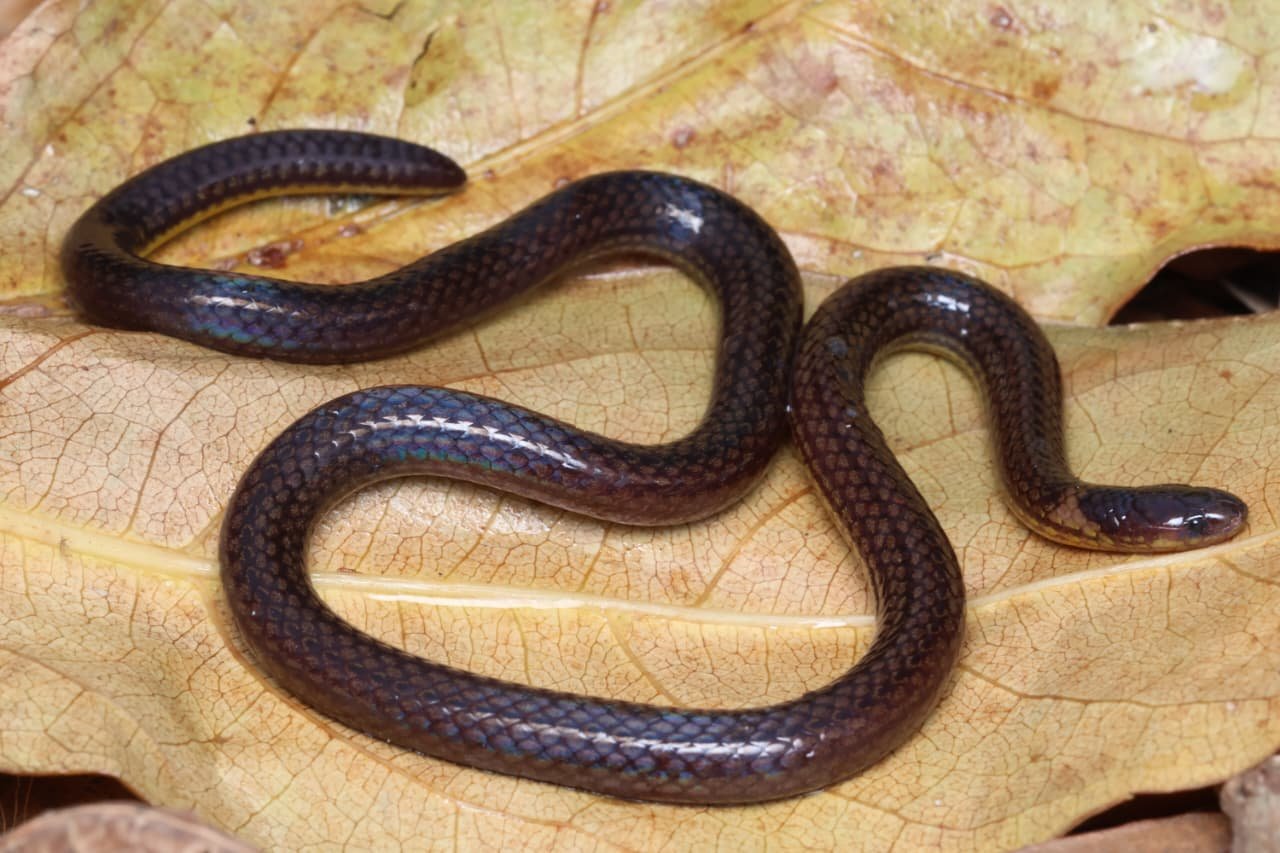
Aizawl, Jan 6: Scientists from Mizoram University, in collaboration with researchers from Russia, Germany and Vietnam, have identified a new species of reed snake endemic to Mizoram, correcting a taxonomic misidentification that persisted for over a decade and adding to India’s known reptile diversity.
The non-venomous snake has been named Calamaria mizoramensis after the state where it was discovered. The species was formally described in the scientific journal Zootaxa on Monday. According to the research team, specimens collected in 2008 were earlier mistaken for a widely distributed Southeast Asian species.
Lead researcher HT Lalremsanga, professor of zoology at Mizoram University, said detailed morphological examinations and DNA analysis carried out over several years confirmed that the snake represents a distinct evolutionary lineage. Genetic divergence of more than 15 percent from its closest relatives met the criteria for recognition as a new species.
Specimens were recorded from forested areas around Aizawl, Reiek, Sihphir and Sawlêng, as well as districts including Mamit and Kolasib. The species is nocturnal and semi-fossorial, inhabiting humid hill forests at elevations ranging from 670 to 1,295 metres. Researchers also noted its presence near human habitations, including the university campus.
While the species has so far been confirmed only from Mizoram, scientists said its range could extend to neighbouring regions such as Manipur, Nagaland, Assam or the Chittagong Hill Tracts of Bangladesh, subject to further verification.
With this discovery, Mizoram’s herpetofauna checklist has been updated to 169 species, comprising 52 amphibians and 117 reptiles. The new species has been provisionally assessed as “Least Concern” under the IUCN Red List, citing its relatively wide local distribution and absence of major threats. Researchers have called for additional surveys across the hills of Northeast India to better document the region’s biodiversity.