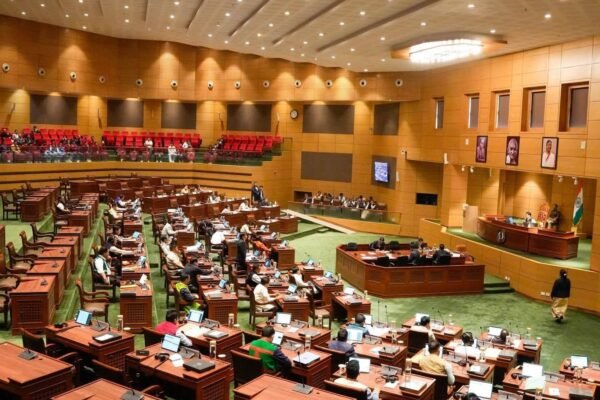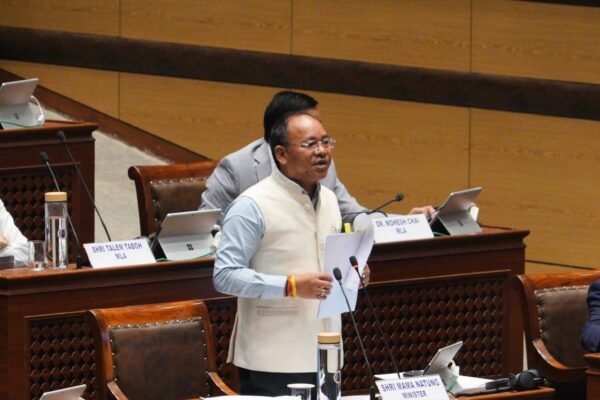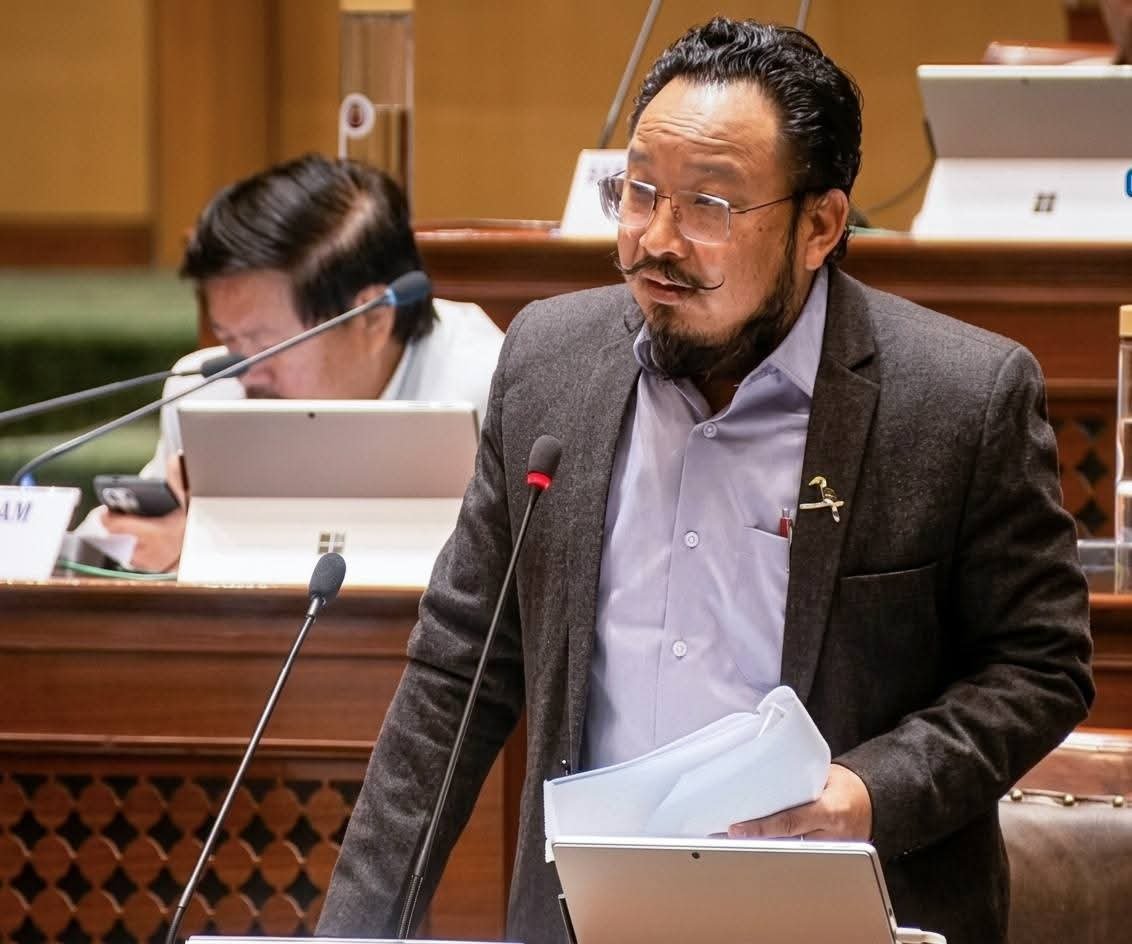
Itanagar, Mar 9: The Government of Arunachal Pradesh is expanding welfare initiatives aimed at improving the socio-economic conditions of the Puroik community, Social Justice, Empowerment and Tribal Affairs (SJETA) Minister Kento Jini informed the Arunachal Pradesh Legislative Assembly on Monday.
Replying to a question from Hayeng Mangfi, a legislator of the Bharatiya Janata Party, the minister said several targeted schemes are being implemented through the Autonomous Puroik Welfare Board (APWB). The board, established in 2017 under the SJETA department, is tasked with assessing the socio-economic status of the Puroik community and facilitating the implementation of central and state welfare programmes.
Jini said the initiatives include vocational training programmes, financial assistance for self-employment, hostel facilities for Puroik students, and opportunities to pursue professional courses such as nursing. The schemes are aimed at improving access to education, strengthening livelihoods, and enhancing social security for members of the community.
The Puroik community—formerly known as Sulung—is recognised as a Scheduled Tribe and is primarily concentrated in districts including East Kameng, Kurung Kumey, Kra Daadi, Papum Pare, and Upper Subansiri in Arunachal Pradesh. The community has historically faced socio-economic challenges and limited access to basic services.
The minister also cited a recent development under the Arunachal Pradesh Freedom of Religion Act, 1989 framework, noting that Bopai Puroik became the first member of the community to serve as deputy commissioner of the newly created Bichom district after beginning his career as a circle officer.
Responding to a supplementary question from Mangfi on whether the state would seek Particularly Vulnerable Tribal Group (PVTG) status for the Puroik community from the Union Ministry of Tribal Affairs, Jini said the matter would be taken up with the Centre. He added that a state gazette notification is already in place to ensure the community’s eligibility for welfare benefits.