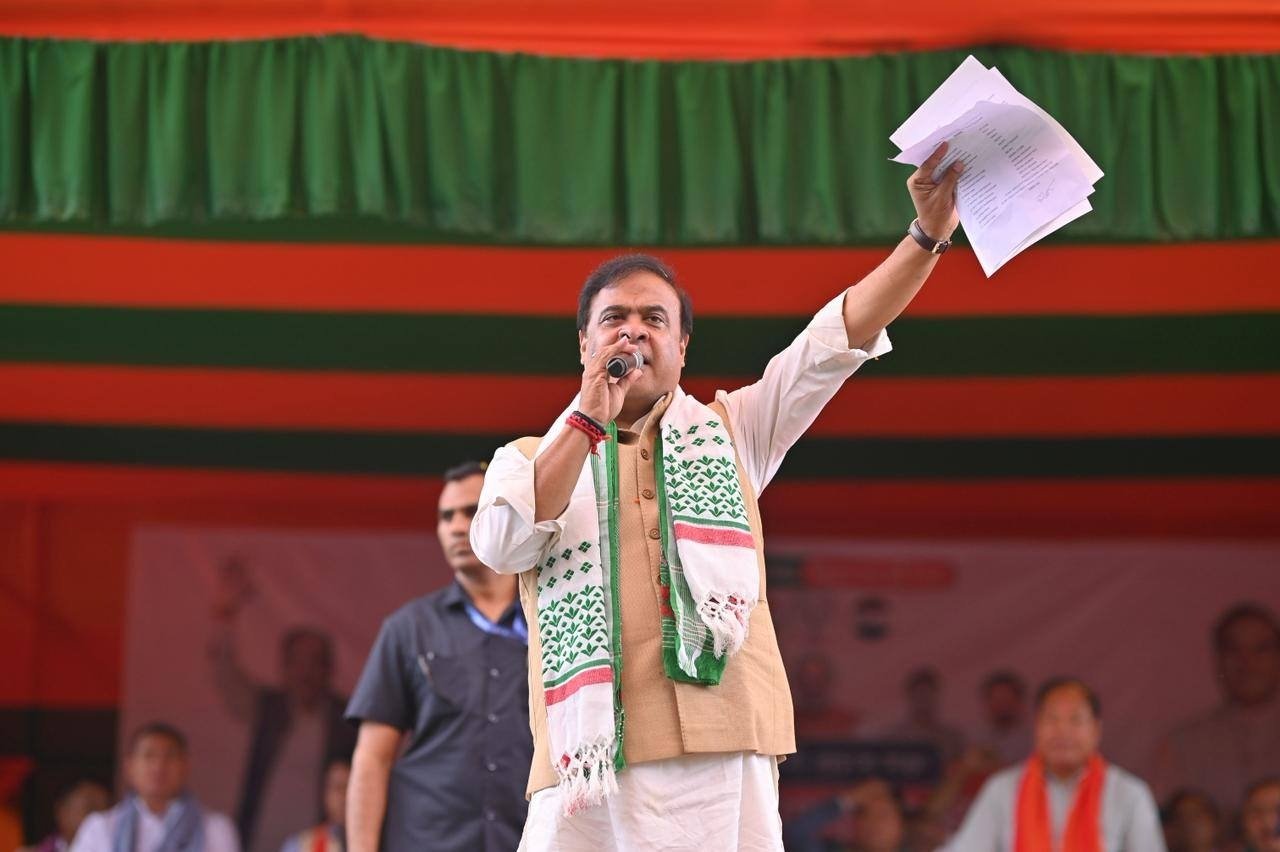
Guwahati, March 28: Assam Chief Minister Himanta Biswa Sarma on Saturday launched a fierce offensive against the Congress, accusing the opposition of historically rampant corruption in government recruitment while promising a massive employment and land recovery drive if the BJP returns to power.
Addressing an election rally in Sipajhar for BJP candidate Paramananda Rajbongshi, Sarma challenged Congress leaders Gaurav Gogoi and Binanda Saikia to name a single tenure where jobs were provided without bribes. The Chief Minister claimed his administration has provided 1.65 lakh government jobs over the last five years and pledged to create an additional two lakh positions in the next term. Contrasting this with the previous Congress regime, Sarma alleged that even positions like Anganwadi workers required bribes of ₹2 lakh, while higher posts allegedly commanded between ₹5 lakh and ₹1 crore.
The rally saw a significant escalation in the Chief Minister’s rhetoric regarding the “Miya” community, a term used for Bengali-speaking Muslims often identified as Bangladeshi immigrants in the state’s political discourse. Sarma dismissed the Congress slogan of a “New Great Assam,” questioning if it would be built with “Bangladeshi Miyas” and stating that his government had taught them a “lifetime lesson” from Garukhuti to Goalpara.
He maintained that his administration had already freed 1.5 lakh bighas of land from occupation and promised to recover an additional five lakh bighas in the next five years. Responding to alleged comments from AIUDF chief Badruddin Ajmal regarding the “backbone” of the Assamese community, Sarma added that while his government had “broken hands and legs” in the last five years, they would “break their backbone” in the next term.
This election marks the first assembly contest following the 2023 delimitation exercise, a factor that has significantly altered the state’s political map. As the BJP-led coalition seeks a third consecutive term, the campaign has increasingly focused on a blend of aggressive developmental promises and identity politics.