Fashion brands today don’t design more. They design smarter. Instead of creating a distinct apparel design for the website, social media postings, and ads, marketers today start with a strong foundation of creativity and then spread it where the message is needed. In this way, marketers are able to save time and ensure branding consistency.
With such tools at hand, a “design once, scale everywhere” attitude, such as merchandise designs, has actually become quite easy to implement. Tools like an AI image generator make it possible to first conceptualize a hero image and then seamlessly transform it into other formats without altering the effect created by the original concept.
The one-visual mindset: building a creative core for your fashion
The best cross-platform work is built on a single, adaptable design or color for your couture business. This isn’t a finished poster or ad, but rather the DNA of the visual. This is where the mood, key element, color, and hook are defined.
Smart brands ask early questions such as:
- Which is the one message this visual has to convey throughout?
- What is the one element that has to be the same for all platforms?
- What can change without breaking recognition?
To begin with, such an attitude ensures the designs are not disjoint and incongruous in the long run.
One idea, many formats: adapting couture visuals with Dreamina
Step 1: Write a descriptive text prompt
Click on the Dreamina tool and start by composing an elaborate description of the overall concept of the image you want to convey. For instance, the subject, mood, brand tone, and feel on platforms.
For instance: Create a current brand visual with an assertive fashion image, clean typography space, and a neutral color scheme that transitions well to web site headers, social media promotions, and other online advertising.
Thus, it establishes a basis for a design intended for dissemination through different platforms and formats.
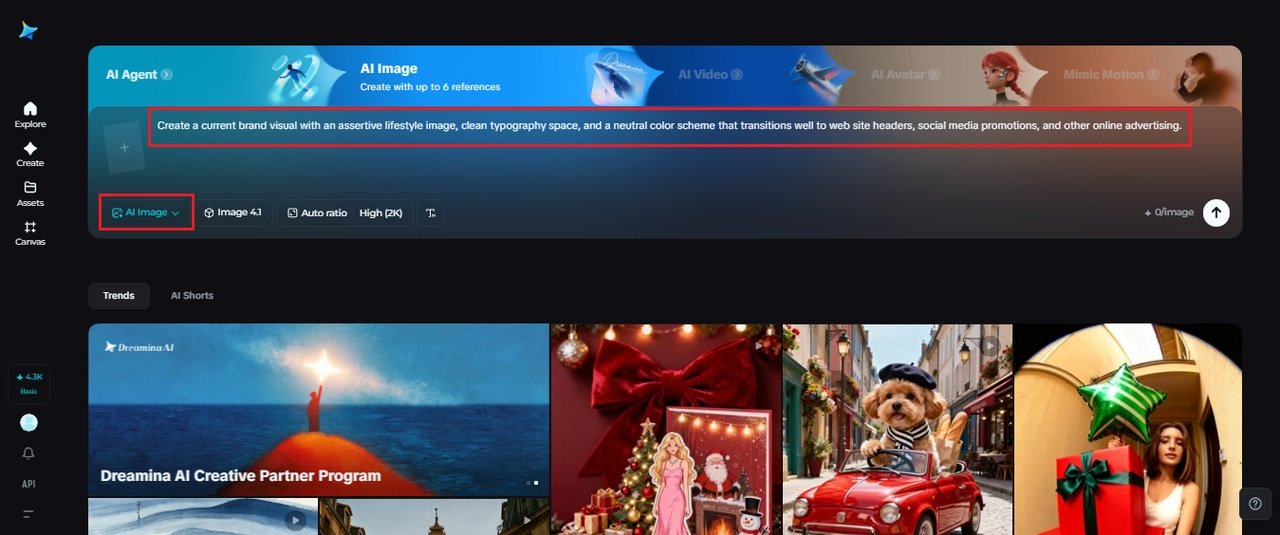
Step 2: Modify parameters and generate
Select a model that suits your brand’s aesthetic and set the aspect ratio depending on where that particular visual goes first. Size and resolution could be 1k for preview shots or 2k for more refined designs and clicked to produce images by selecting Dreamina’s logo. This process could be done for different ratios to make different versions for various platforms for that particular idea or visual concept.
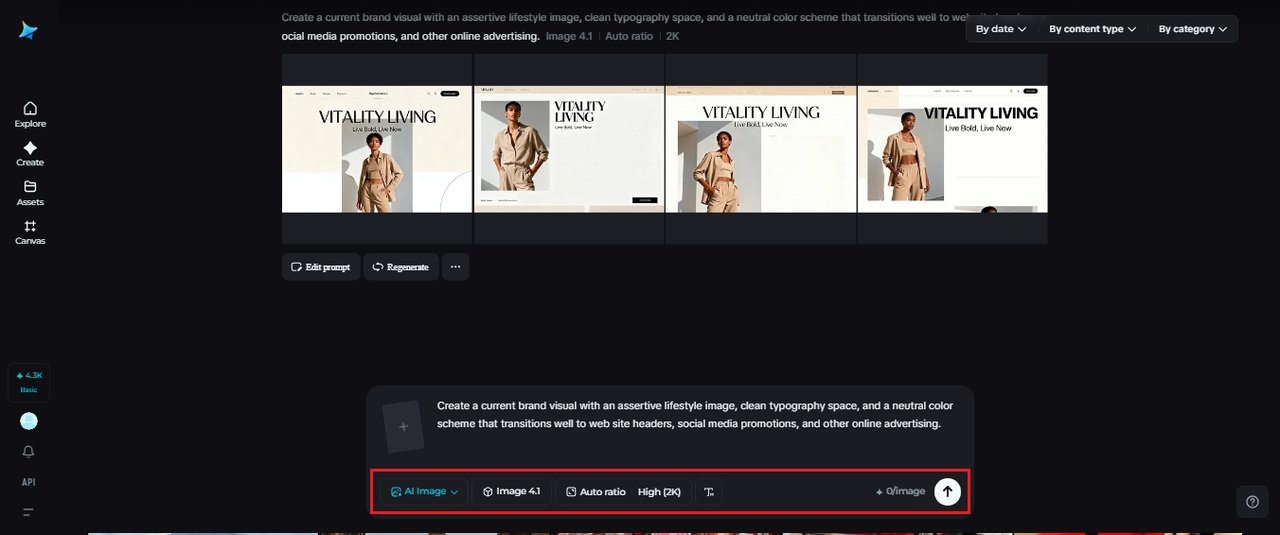
Step 3: Customize and save
Step Use Dreamina’s tools to fine-tune each version. Stretch the canvas to enlarge banner graphics, inpaint to reformat text boxes, eliminate distractions in photos, or touch up details. When each format looks just right, click the “Download” icon to save visuals designed specifically for the web, social, or advertising.
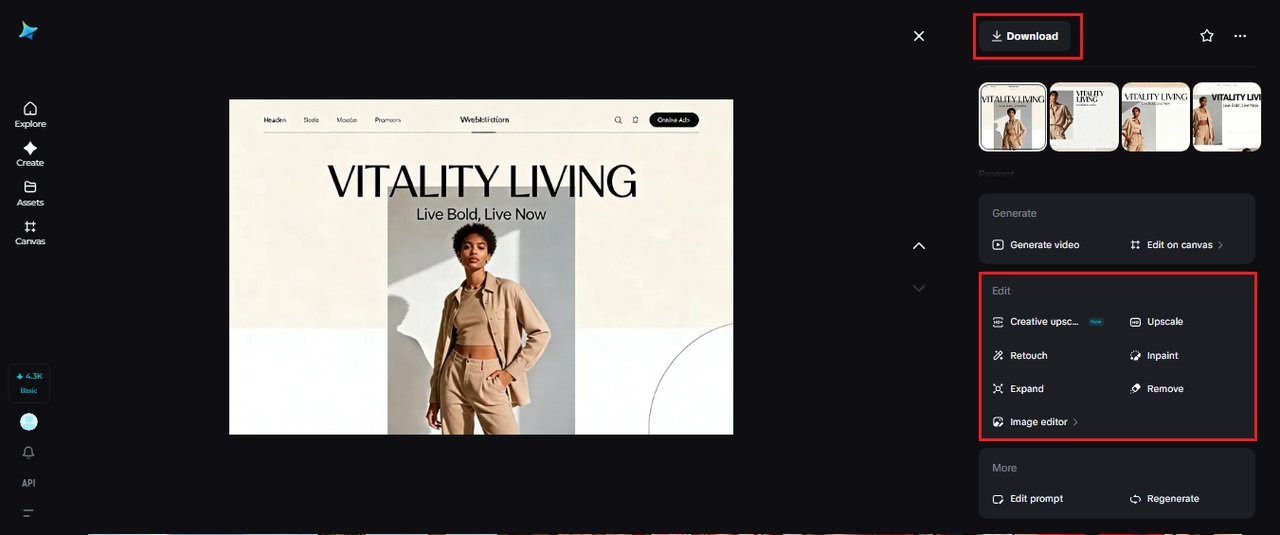
Same idea, different frames: why re-sizing isn’t enough
Adapting images isn’t solely an issue of cropping images for aspect ratios. An Instagram post with a square aspect ratio, a website header with a wide aspect ratio, and an ad placement with a vertical aspect ratio all have a different set of priorities for visual information about the fashion brand.
Effective adaptation involves:
- Where the focal point is in each layout?
- How different formats affect the hierarchy of texts?
- What about expansion or reduction in background space?
That is where flexibility in design creativity has its place. A good graphic design needs to be flexible to accommodate changes when they occur.
Web, social, and ads each speak its own visual language
Every fashion-related platform has its set of taboo graphical laws. Web pages are gracious about simplicity and whitespace. Social media pages require now and flash. Advertising requires quick understanding and high contrast.
Designers may fine-tune:
- Color intensity for scroll-intensive areas
- Font size and positioning on mobile-first design rendering
- Crops to maintain subject positioning in style
Utilizing Dreamina’s AI art generator means that teams can easily experiment with such changes of style and see how the concept might appear editorial, playful, minimal, and dramatic without having to start the redesign process all over again.
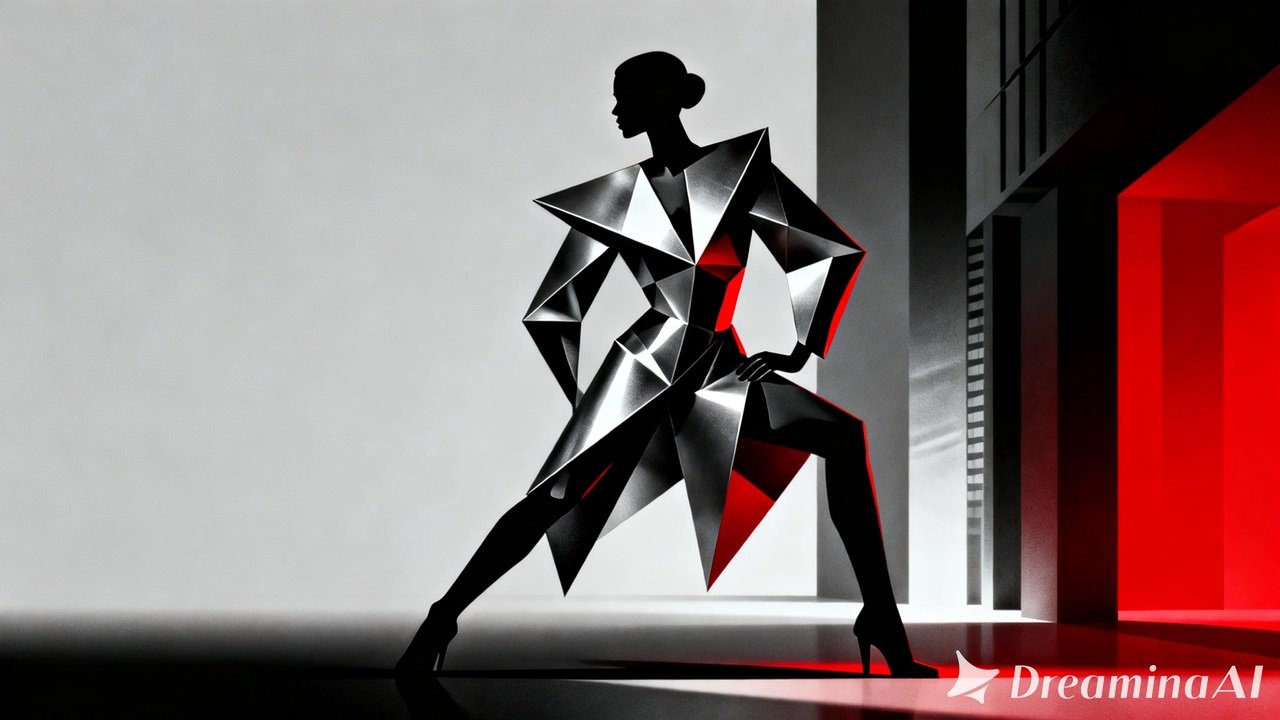
Consistency without boredom: keeping it fresh
Adaptive multi-platform isn’t about repetition, but recognition. When viewing different versions of the same visual, the viewer hopes for consistency, not duplication. Variations in layout, positioning, and emphasis help hold the viewer’s attention while stimulating memory recall of branding.
Well-adapted visuals may share these:
- The same core imagery or theme is employed
- Consistent color scheme and typofaces
- Platform-specific pacing and awareness
This helps the campaign feel expansive rather than exhausting.
Developing visuals into video without losing the fashion concept
Static visuals don’t have to remain static. Many fashion campaigns today extend a single image concept into short videos for ads or social placements. An AI video generator lets apparel brands create video assets directly from text prompts or reference images, matching the look and messaging of the original design.
This process is all about creation, not animation tricks. Marketers create clean, platform-ready videos that preserve the original visual identity while adding time-based storytelling for the fashion community. It’s especially useful for ad formats where motion increases visibility but consistency still matters.
Why ‘design once’ is now a competitive creative factor
In a rapidly changing digital space, speed and consistency are key factors in a fashion business competing effectively in the marketplace. If a business can roll out a common visual identity on several platforms without having to redesign everything, they are quicker and more cohesive in their execution.
Dreamina encourages this approach through the use of modular and flexible fashion visuals that are easy to reimagine without compromising on the idea. Scale to all publishing platforms is all about cutting corners, not about the intentions of the design.