You do not need a clinic visit or special gadgets to understand your weight status. With a weighing scale, a simple height measurement, and a BMI calculator, you can estimate whether you are underweight, in a healthy range, overweight, or obese. Pairing this with a BMR calculator helps you plan daily calories so you can reach your fitness goals in a steady, practical way.
What BMI tells you: Especially for Indian adults
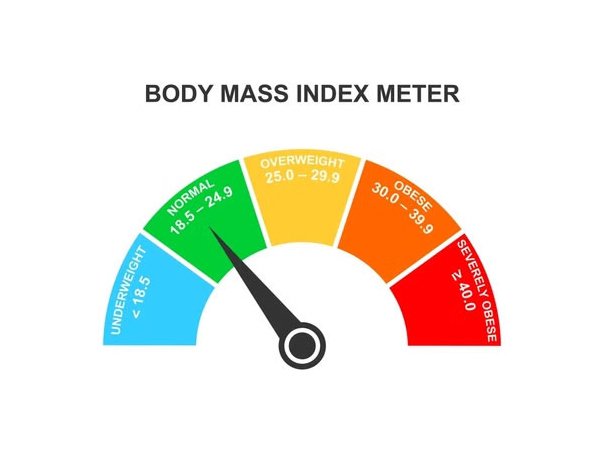
Body Mass Index (BMI) uses your weight and height to classify body weight. For many Indians, health risks such as Type-2 diabetes and hypertension start at lower BMI levels than in some other populations. That is why the widely used Asia-Pacific cut-offs are:
| BMI range | Category (adults) |
| < 18.5 | Underweight |
| 18.5 – 22.9 | Healthy weight |
| 23.0 – 24.9 | Overweight (at risk) |
| ≥ 25.0 | Obese |
A BMI calculator does not diagnose disease, but it flags risk so you can act early. Adjust meals, increase activity, or visit a doctor for a full evaluation.
How to measure BMI correctly at home
1. Weigh yourself (kg)
Use a digital scale on a hard floor, ideally in the morning, after using the washroom, and before breakfast. Wear light clothing.
2. Measure height (metres)
Stand barefoot, heels together, back against a wall, chin level. Mark the top of your head on the wall and measure with a tape. Convert centimetres to metres (165 cm = 1.65 m).
3. Use the BMI formula or a BMI calculator
BMI = weight (kg) ÷ [height (m)]²
Example: 70 kg and 1.70 m; 70 ÷ (1.70 × 1.70) = 70 ÷ 2.89 ≈ 24.2. A BMI calculator gives the same number instantly and shows your category.
4. Recheck every 4–6 weeks
Daily changes are noise; monthly trends show progress.
Quick tip: If you do not want to do the maths, enter height and weight in a BMI calculator on your phone and save the result for easy tracking.
How BMI and BMR work together
- BMI tells you where you stand on weight risk for your height.
- BMR (Basal Metabolic Rate) estimates the calories your body needs at rest to run essential functions.
A BMR calculator factors your age, sex, height, and weight to give a daily baseline. Add activity to estimate total daily calories.
Using both tools is powerful. The BMI calculator shows your risk category, while the BMR calculator helps you plan intake (and exercise) to move to a healthier range without guesswork.
Let us look at a few simple examples to help you understand:
Example A: Office worker, minimal exercise
Height 1.65 m, weight 68 kg;
BMI ≈ 24.98 (overweight at risk).
Use a BMR calculator to find baseline calories; suppose it shows around 1,420 kcal/day.
With light activity, total needs might be around 1,700–1,800 kcal/day.
Target a 300–400 kcal deficit through portion control and brisk walking; recheck with the BMI calculator after 6 weeks.
Example B: New parent, little time for gym
Height 1.58 m, weight 55 kg;
BMI ≈ 22.0 (healthy).
A BMR calculator might show around 1,250 kcal/day.
Focus on protein at each meal, 30–40 minutes of walking, and strength sessions twice a week to maintain weight and improve fitness.
Reading your number the right way
A BMI calculator offers a quick screen, but context matters:
- High muscle mass: Athletes may show a “high” BMI despite low body fat. In such cases, check waist size and fitness markers.
- Central obesity: Waist circumference (men ≥ 90 cm, women ≥ 80 cm) adds risk even if BMI is “normal”.
- Age and health conditions: Older adults and those with chronic illness should discuss targets with a doctor rather than chasing a single number.
Turning numbers into action
Here is a practical plan to use your readings without making life complicated.
1. Set a 12-week goal
Pick a small, realistic target (for example, move from BMI 26 to 24.8). Use the BMI calculator to map the weight that matches your next milestone.
2. Use the BMR calculator to plan meals
If your BMR calculator shows 1,350 kcal/day and your activity adds 400 kcal, plan for around 1,600–1,700 kcal/day to lose weight steadily.
3. Build your plate
- Half vegetables and salad
- A quarter protein (dal, paneer, eggs, chicken, fish)
- A quarter whole grains (roti, brown rice, millets)
- Healthy fats (groundnut, mustard, or olive oil) in small amounts
- Add fruit, curd, and water throughout the day
4. Move more
- Walk 7,000–9,000 steps/day.
- Two short strength sessions weekly (squats, push-ups, lunges, bands).
- Stretch for 10 minutes at night to improve sleep.
5. Track with purpose
- Check weight weekly at the same time.
- Use a BMI calculator every month.
- Log waist size. The tape often shows wins before the scale does.
The bottom line
You can take charge of weight management from home with two simple tools. Use a BMI calculator to know your current category and monitor change. Use a BMR calculator to set a sensible calorie target that matches your routine. Track once a month, aim for gradual improvement, and discuss any concerns with a doctor, especially if you have existing conditions. Small, consistent steps guided by these numbers can make a real difference to your energy, confidence, and long-term health.