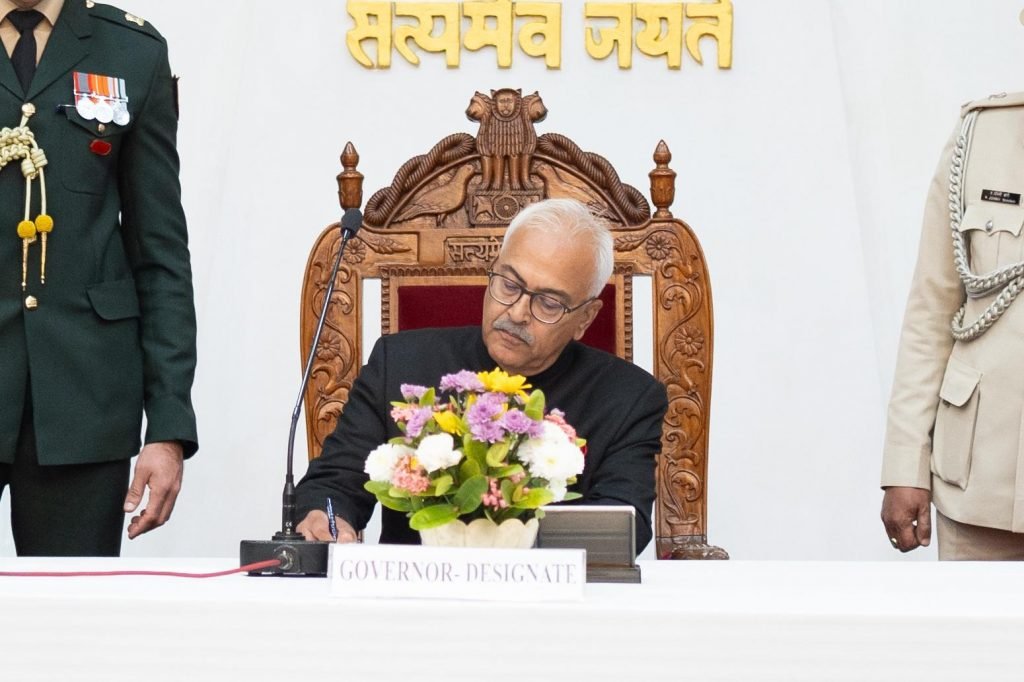
The 7th Session of the 12th Manipur Legislative Assembly commenced on a politically significant note on Thursday, a day after President’s Rule under Article 356 was revoked, coinciding with the 356th day since its imposition. The development marked the restoration of the Assembly’s functioning, with the Governor delivering an inaugural address that lasted over an hour.
In his address, the Governor said Manipur continues to face an extraordinary situation following prolonged ethnic violence that has affected both hill and valley districts. While noting a gradual improvement in the law-and-order situation due to sustained deployment of security forces, he cautioned that peace remains fragile and requires constant vigilance and coordinated action.
Restoration of peace and normalcy, he said, remains the government’s highest priority.
The Governor emphasized close coordination between state and central security forces to prevent fresh violence, curb armed activities, and ensure public safety. He also referred to ongoing efforts to recover looted weapons and stabilize sensitive areas across the state.
A major portion of the address focused on the rehabilitation of internally displaced persons (IDPs). The Governor informed the House that thousands displaced by the conflict are still living in relief camps. He said the government is pursuing phased rehabilitation, including temporary housing, essential amenities, healthcare services, and livelihood support, with special attention to women, children, senior citizens, and persons with disabilities.
He also highlighted the severe impact of the unrest on healthcare and education, noting disruptions in access to hospitals and schools in many areas. Measures are being taken, he said, to restore health infrastructure and ensure continuity of education for displaced students through special support mechanisms.
Addressing the issue of drug trafficking and illegal poppy cultivation, the Governor described it as a serious threat to Manipur’s social fabric and internal security.
Reaffirming the government’s commitment to its anti-drug, he referred to intensified enforcement actions and stressed the need to promote alternative livelihoods for sustainable solutions.
On governance, the Governor underlined the importance of a transparent, responsive, and people-centric administration, particularly in the post-conflict phase. He urged legislators to work collectively to rebuild public trust in democratic institutions and ensure effective implementation of welfare schemes.