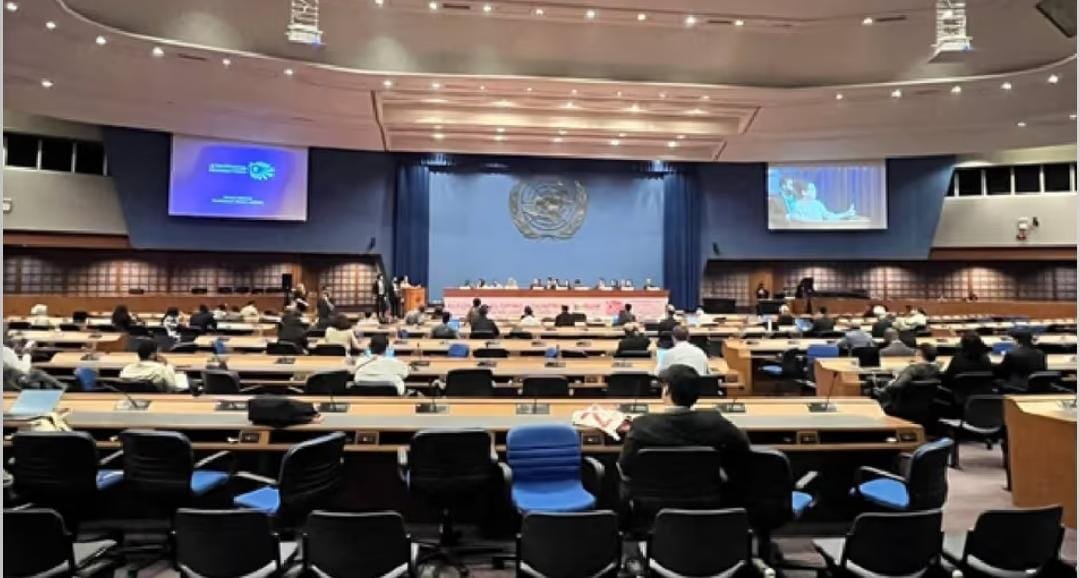
Concerns over inclusion, digital sovereignty and equitable access dominated discussions at a three-day international artificial intelligence summit held under the aegis of the United Nations in Bangkok, where voices from smaller regions such as Manipur found prominence in global policy deliberations.
The high-level summit, organised by AI for Developing Countries, was attended by over 600 delegates from more than 150 countries and focused on advancing the vision of “AI for All” while addressing the widening digital divide affecting developing nations and smaller states.
India was represented at the summit by Haobam Joyremba, Founder and Managing Director of CubeTen Technologies Pvt. Ltd., who hails from Manipur.
Marking his third consecutive participation at United Nations platforms after earlier engagements in Geneva and Vienna, Joyremba’s presence underscored the growing relevance of perspectives from smaller and underrepresented regions in shaping international technology and governance frameworks.
During the Bangkok deliberations, multiple specialised working groups were formed to address sector-specific challenges. Joyremba actively contributed to the AI for Smaller Communities and AI for Governance groups, where he stressed that artificial intelligence holds significant potential to strengthen governance in smaller states like Manipur by improving service delivery, enhancing transparency, supporting evidence-based policy formulation and deepening citizen engagement—provided AI systems are locally grounded and context-aware.
He, however, cautioned that many smaller regions, including parts of the North East, suffer from a lack of structured and digitised data, making them largely invisible to mainstream Large Language Models. This data gap, he noted, restricts meaningful participation in the AI ecosystem and reinforces existing digital inequalities.
A major concern raised at the summit was the increasing concentration of global digital infrastructure in the hands of a few multinational technology corporations. Joyremba warned that such dependence poses long-term strategic risks for developing regions, leading to technological lock-in, unchecked data extraction and sustained reliance on external platforms. Without timely corrective measures, he observed, regions like Manipur risk remaining passive consumers of AI technologies rather than active contributors or co-creators.
The discussions also highlighted the broader issue of digital colonisation, where licensing costs flow outward while local governance needs remain unmet and cultural identities face erosion. Delegates emphasised the need for responsible AI design that safeguards indigenous languages, local knowledge systems and region-specific governance frameworks.
One of the key outcomes of the summit will be a consolidated policy document capturing these concerns and recommendations. The document is expected to be placed before member nations for ratification, with the aim of influencing future international frameworks on AI sovereignty, inclusive governance and equitable technological development—issues that carry particular significance for smaller regions such as Manipur.