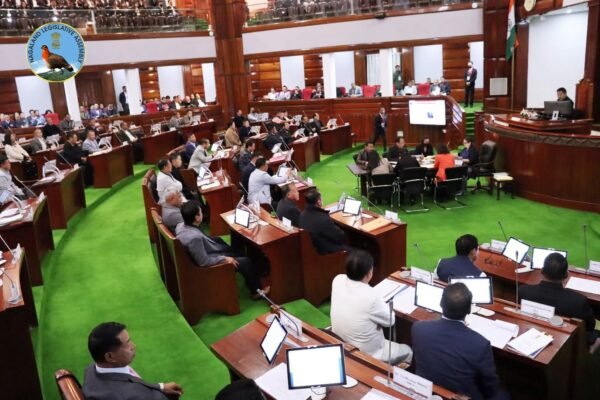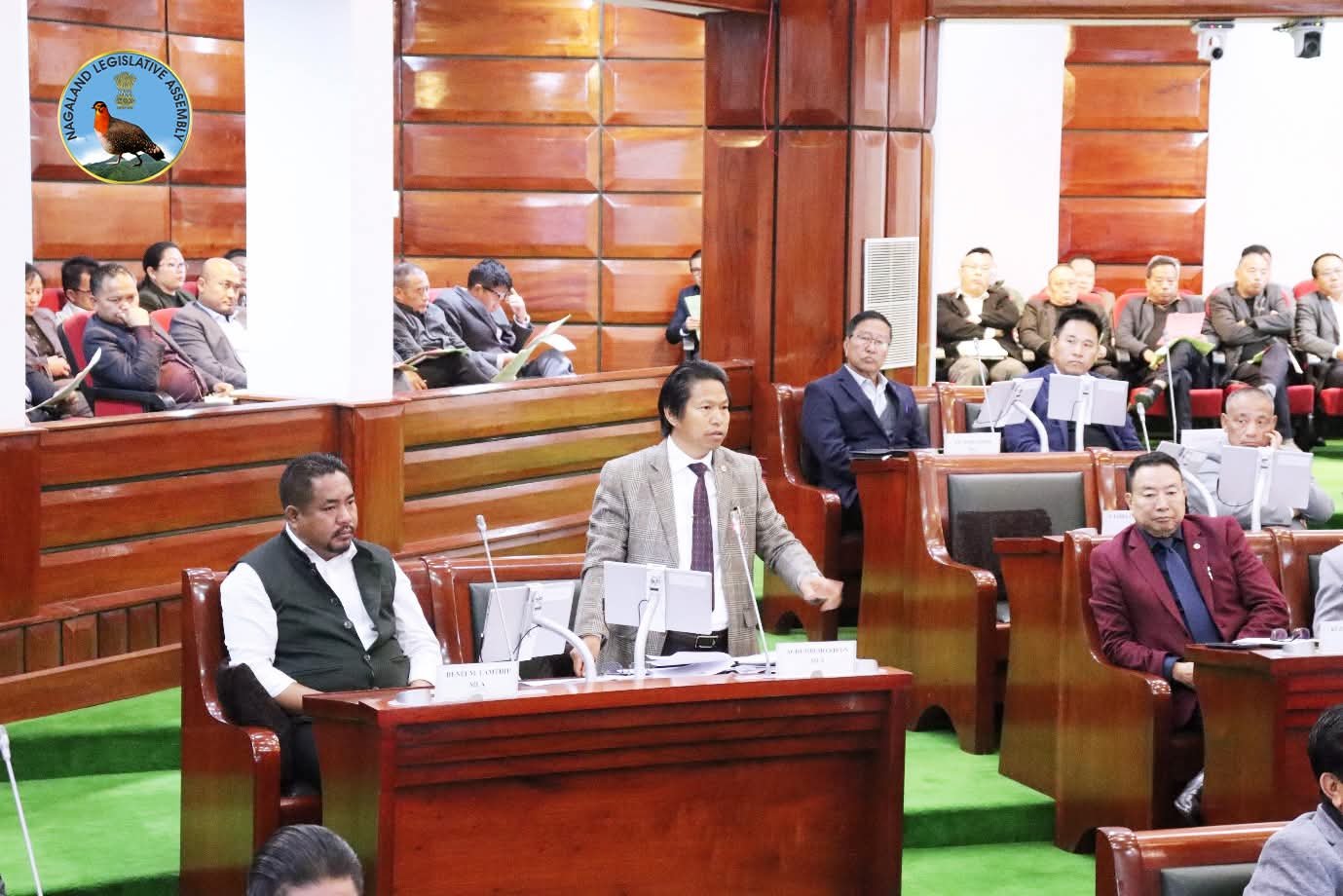
Kohima, Mar 27: Achumbemo Kikon, a ruling NPF legislator, on Thursday called for immediate and coordinated action to address climate change and environmental degradation in Nagaland.
Raising the issue during Zero Hour in the Assembly, Kikon, who also chairs the Assembly Committee on Environment and Climate Change, described climate change as a major global challenge driven largely by fossil fuel emissions. He referred to its global impacts, including rising temperatures, extreme weather events, melting ice caps, and biodiversity loss.
Highlighting the situation in India, he pointed to increasing instances of floods and droughts, along with health risks linked to air pollution, particularly affecting children.
Focusing on Nagaland, Kikon said the state is experiencing higher temperatures, irregular rainfall patterns, and more frequent extreme weather events. He noted that these changes are affecting traditional jhum cultivation, leading to shorter fallow cycles, soil erosion, and reduced crop yields, thereby impacting rural food security.
He also drew attention to environmental degradation across the state, including drying rivers, streams, and springs, deforestation in hill areas, and loss of biodiversity. He cited pollution concerns in water bodies such as the Doyang reservoir in Wokha, and the deteriorating condition of the Dhansiri and Chathe rivers in Dimapur due to sewage discharge, waste dumping, and resource extraction.
Kikon further noted rising air pollution levels in non-attainment cities like Kohima and Dimapur. He also raised concerns over unregulated rat-hole coal mining, stating that it has led to land degradation, water contamination, and impacts on local livelihoods.
He called for measures including afforestation, protection of water sources, scientific management of jhum cultivation, improved waste management systems, stricter regulations on mining and construction, restrictions on borewell use in hill areas, and increased community participation in conservation efforts.