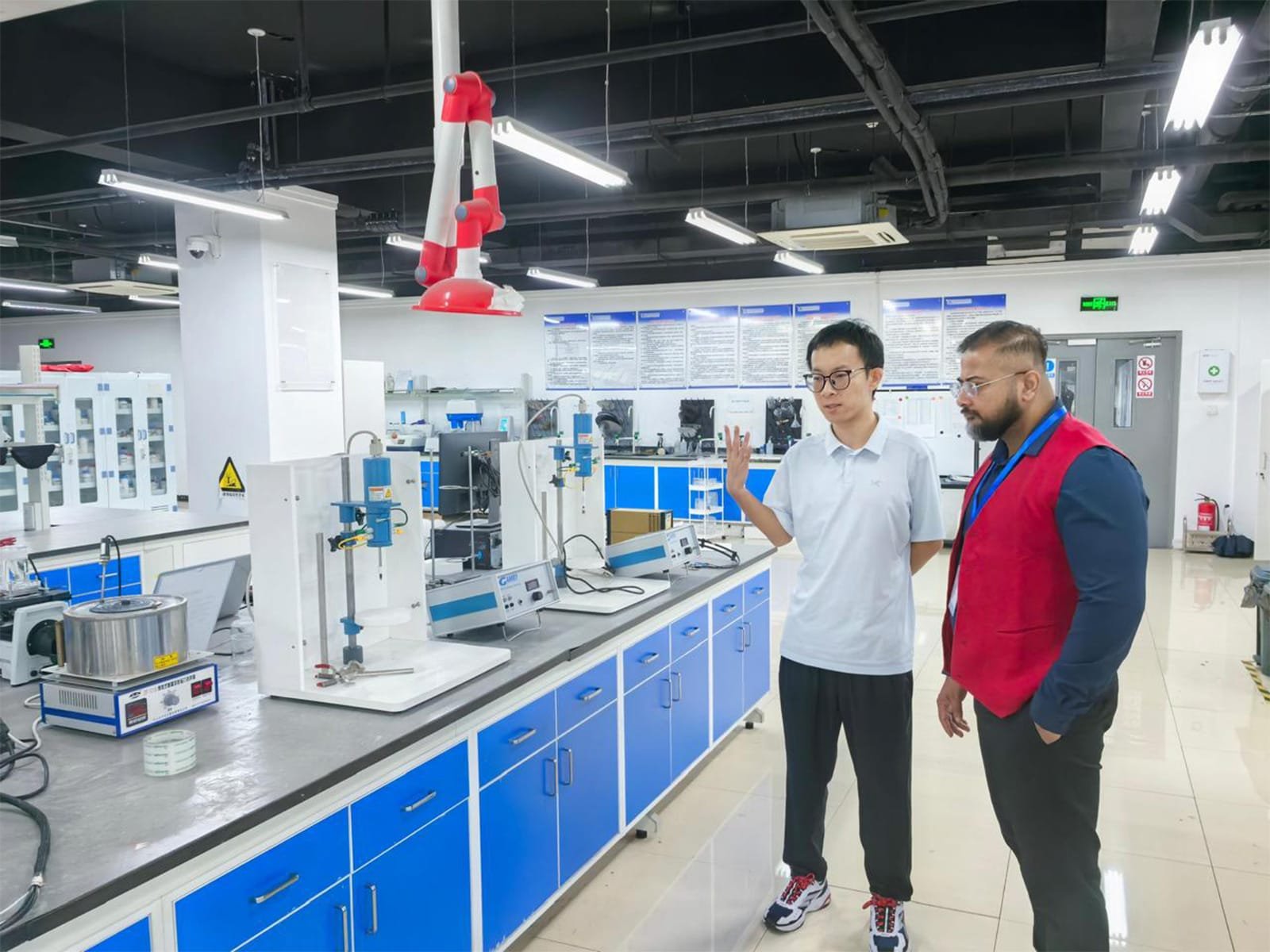
Kohima, Jan 20: Researchers from Nagaland University, in collaboration with the University of Science and Technology Beijing, have developed an eco-friendly corrosion inhibitor using waste apple leaves, offering a sustainable alternative to conventional chemical inhibitors used in industry.
According to the study, discarded apple leaves were converted into carbon quantum dots that provided up to 96.2 per cent protection against copper corrosion in highly acidic environments. The findings have been published in the Journal of Alloys and Compounds.
The research team produced the apple-leaf-derived carbon dots through a green hydrothermal process. When applied to copper surfaces, the nanomaterials formed a stable protective film that prevented corrosive ions from attacking the metal, the study reported. Electrochemical tests and theoretical modelling confirmed the effectiveness of the protective layer.
The study was led by Ambrish Singh from the Department of Chemistry, Nagaland University, who is also a visiting professor at the University of Science and Technology Beijing. Singh said the inhibitors could help extend the service life of pipelines, storage tanks and industrial equipment operating under acidic conditions, while also reducing maintenance costs and environmental impact.
Yujie Qiang from the National Centre for Materials Service Safety, Beijing, who collaborated on the project, explained that sulfur and nitrogen doping in the nanoscale particles created active sites that allowed the material to bind strongly to copper surfaces, enhancing corrosion resistance.
Nagaland University vice-chancellor Jagadish Kumar Patnaik said the research demonstrated how agricultural waste could be transformed into high-value nanomaterials, contributing to green technology development and circular economy practices.
The research team stated that further work would focus on scaling up the process for pilot-level testing and exploring the integration of the material into industrial coating systems.