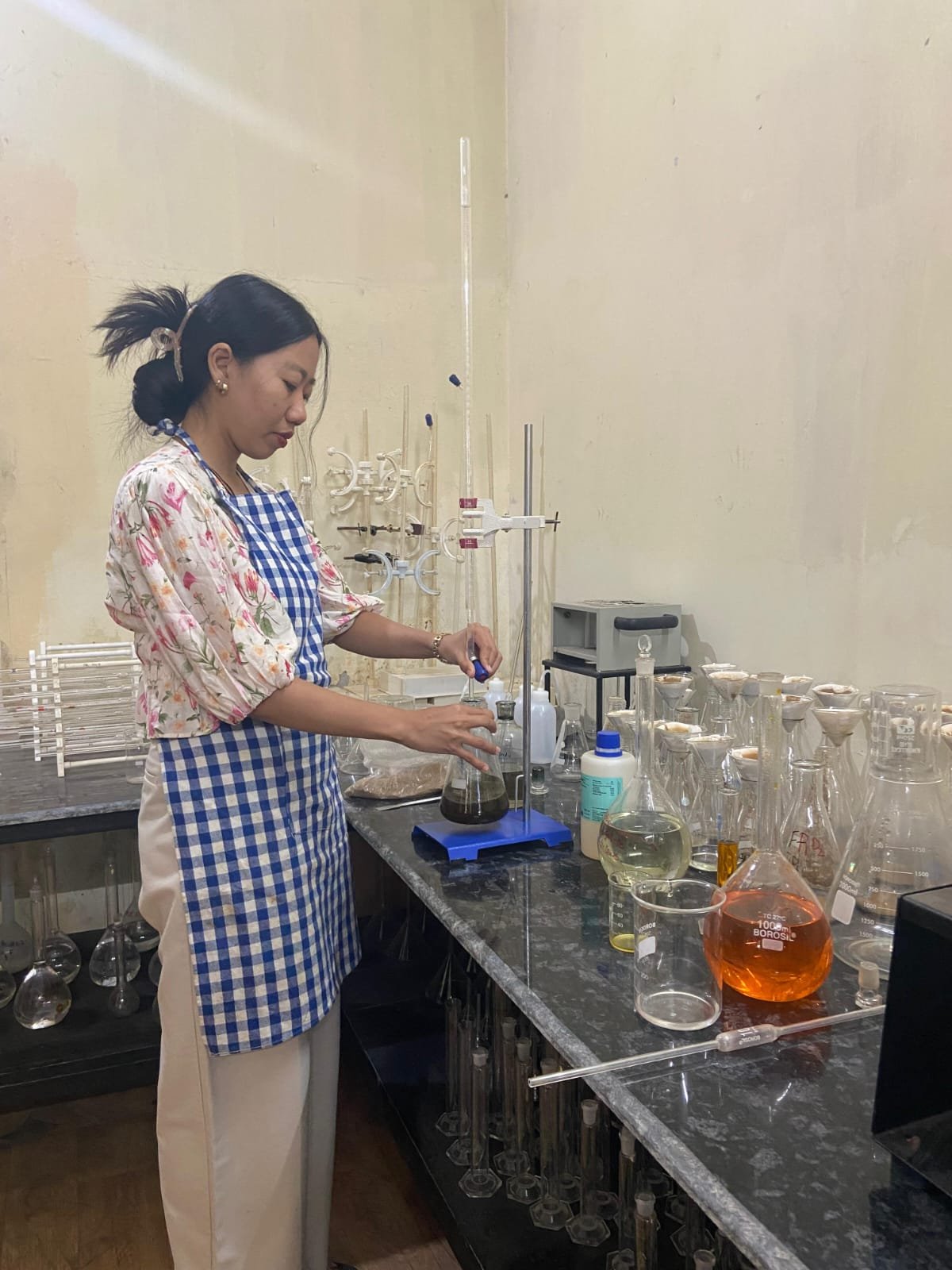
Lumami, Nov 24: A multi-institute research team led by Nagaland University has reported rapid soil degradation in the Dhansiripar region of the State, highlighting strongly acidic soils, declining structural stability, and significant variations in nutrient availability across six surveyed villages. The findings underline the need for immediate adoption of sustainable land management practices.
The study assessed soil health across Amaluma, Dhansirpar, Doyapur, Kiyeto, Melongmen and Razhaphe villages, examining how land use changes driven by agricultural expansion, urbanisation and forest conversion are affecting key soil properties. Researchers analysed soil acidity (pH), bulk density, porosity, water-holding capacity, organic carbon and nutrient levels, noting that existing practices are contributing to reduced fertility and heightened erosion risks.
The research was jointly conducted by Nagaland University, ICAR–Indian Agricultural Statistics Research Institute, University of California San Francisco, Dibrugarh University, Tocklai Tea Research Institute and Diphu Medical College and Hospital. The findings have been published in Environmental Monitoring and Assessment, an international peer-reviewed journal.
Nagaland University Vice Chancellor Jagadish K Patnaik said the study highlights an urgent need for sustainable land-management interventions to safeguard agricultural productivity and environmental health. The team recorded strongly to moderately acidic soil conditions, with pH levels from 4.9 to 5.9, and organic carbon content ranging between 0.45 and 3.69 percent. Significant variations were also observed in macronutrient availability and cation exchange capacity, indicating the need for tailored nutrient management.
Co-author Manoj Dutta from the Department of Soil and Water Conservation said the study’s comparative assessment across paddy fields, cultivated plots, orchards and forest areas offers insights often absent in similar research. Tanmoy Karak from the Department of Soil Science added that the Soil Structural Stability Index showed signs of degradation, particularly in lowland paddy zones, reaffirming the need for land-use-specific conservation strategies.
PhD scholar Reshinaro Tzudir noted that the research points to alarming susceptibility of regional soils to erosion and fertility loss, urging adoption of improved agricultural practices to protect long-term ecosystem sustainability. Ranjit Kumar Paul from ICAR-IASRI said the use of advanced multivariate statistical tools strengthened the reliability of the findings and helped clarify land-use interactions.
According to the research team, the study is significant as the Dhansiripar region has previously lacked detailed soil assessments. Its multi-land-use comparative approach and statistical modelling offer a comprehensive view of soil dynamics in the Northeast.
Future research plans include long-term monitoring of soil changes, promoting agroforestry and improved crop rotations, integrating traditional knowledge through community collaboration, and supporting evidence-based land-use planning. The team also plans to explore soil biological properties and conduct comparative studies with other regions.
The project involved researchers from Nagaland University’s School of Agricultural Sciences and collaborating institutions across India and abroad.