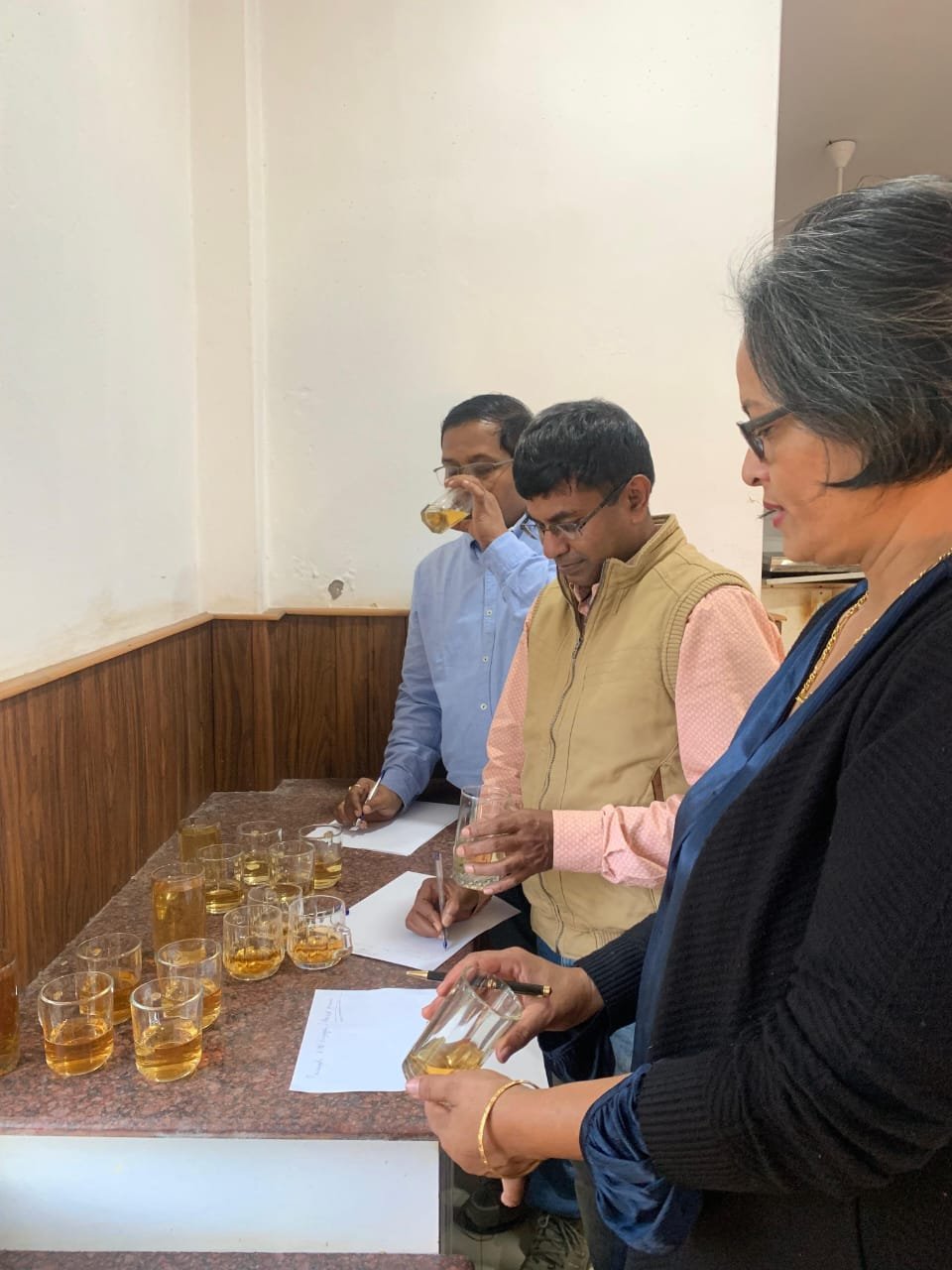
Researchers at Nagaland University have successfully developed high-quality vinegar from pineapple peels, showcasing a sustainable approach to managing agricultural waste while creating new income opportunities for local communities.

Pineapple is one of the most widely grown tropical fruits globally, and Nagaland has emerged as a notable pineapple-producing region. The state’s sweet, juice-rich pineapples—primarily the ‘KEW’ variety—are cultivated across districts including Chumoukedima, Niuland, Dimapur, Kiphire, and Mokokchung. Government programmes such as the Mission for Integrated Development of Horticulture (MIDH) and Mission Organic Value Chain Development for the North Eastern Region (MOVCDNER) have further encouraged commercial cultivation.
Processing pineapples generates significant amounts of peel, pomace, core, and crown, much of which is often discarded. These by-products, rich in fibre, proteins, pectin, vitamins, and minerals, can instead be utilized for value-added products. The Nagaland University study found that pineapple peel is particularly suitable for vinegar production, outperforming other parts of the fruit in acidity, flavour, and overall quality.

Prof. Akali Sema, Department of Horticulture, said, “Vinegar made from the peel consistently delivered superior taste, aroma, and overall quality. This research demonstrates how a commonly discarded material can be transformed from waste to wealth.”
The research team also explored the development of candy from pineapple cores, fibre extraction, and improved cultivation practices to enhance fruit quality, yield, and shelf life. Dr. Animesh Sarkar added that staggered planting methods can help maintain a steady supply, prevent price drops, and generate year-round income for farmers.
Prof. Jagadish K Patnaik, Vice Chancellor of Nagaland University, highlighted the wider impact, stating that the innovation supports environmentally responsible practices, strengthens rural livelihoods, and opens new avenues for entrepreneurship and community-based food processing.
The study, co-authored by Dr. Sentinaro Walling, Prof. Akali Sema, Prof. C.S. Maiti, Dr. Animesh Sarkar, Prof. S.P. Kanaujia, and Ms. Alemla Imchen, has been published in the European Journal of Nutrition and Food Safety.

Nagaland University, the 13th Central University of India, has three campuses and 43 departments offering undergraduate, postgraduate, and Ph.D. programmes across disciplines, with 76 affiliated colleges across the state.