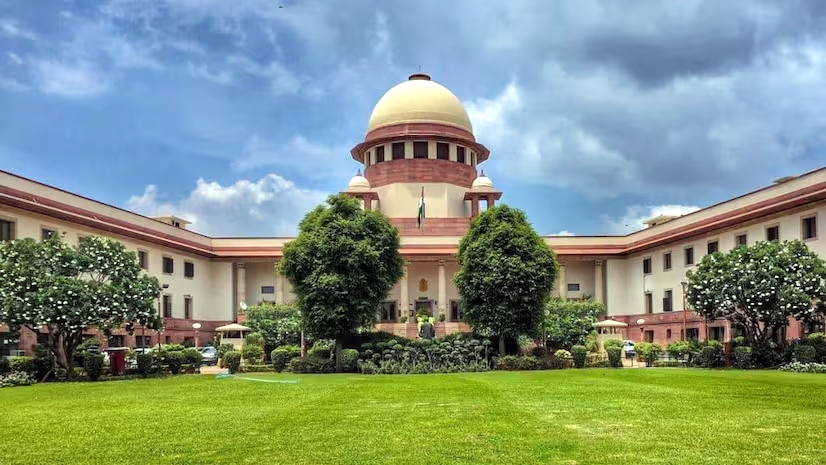
Agartala, February 18, 2026: The Supreme Court on Wednesday disposed of a public interest litigation (PIL) seeking nationwide guidelines to tackle racially motivated violence against citizens from the North-Eastern states, directing the petitioner to place the concerns before the Attorney General of India.
A Bench led by Chief Justice of India Surya Kant, with Justices Joymalya Bagchi and Vipul Pancholi, described as “unfortunate” the recent killing of a Tripura student in Dehradun. “At this stage, we deem it appropriate that the aforesaid issues ought to be brought before the competent authority through the good office of the learned AG,” the Bench observed.
The PIL, filed under Article 32, argued that despite the enactment of the Bharatiya Nyaya Sanhita, 2023 and the Bharatiya Nagarik Suraksha Sanhita, 2023, the law still lacks statutory recognition of hate crimes, mandatory recording of bias motivation at the FIR stage, and specialised mechanisms for investigation or victim protection.
Petitioner Anoop Prakash Awasthi, appearing in-person, urged the Court to establish grievance redressal systems within educational institutions to address identity-based discrimination. “It is very painful. I have so many friends from the Northeast. This exists. Nobody can deny it,” he submitted.
The Bench, however, expressed reservations about region-specific mechanisms, cautioning that such steps could fragment national unity. “We have a strong federal structure. We are supposed to be stronger with unity and not to be identified with regions,” the CJI remarked.
The plea was filed in the backdrop of the December 9, 2025 assault and death of Angel Chakma, a final-year MBA student from Tripura, who was allegedly attacked in Dehradun’s Selaqui area after being subjected to racial slurs. His last words, quoted in the petition, were: “We are not Chinese… We are Indians. What certificate should we show to prove that?”
The petition argued that such hate-driven offences are routinely treated as ordinary crimes, erasing their constitutional gravity. Citing past incidents including the 2014 death of Nido Taniam, it contended that racial violence against Northeastern citizens is a recurring phenomenon acknowledged by the Union government.
The PIL sought binding guidelines to recognise racially motivated violence as a distinct constitutional wrong and to safeguard dignity, equality, and fraternity for all citizens.