Agartala, January 02, 2026: As Poush Sankranti draws near, the festive spirit in Tripura is marked not only by rituals but also by the aroma of age-old confections. Among the delicacies that define the harvest festival, tillai (kadma) and batasha continue to hold pride of place alongside pithas and payesh, carrying forward a legacy deeply woven into community life.
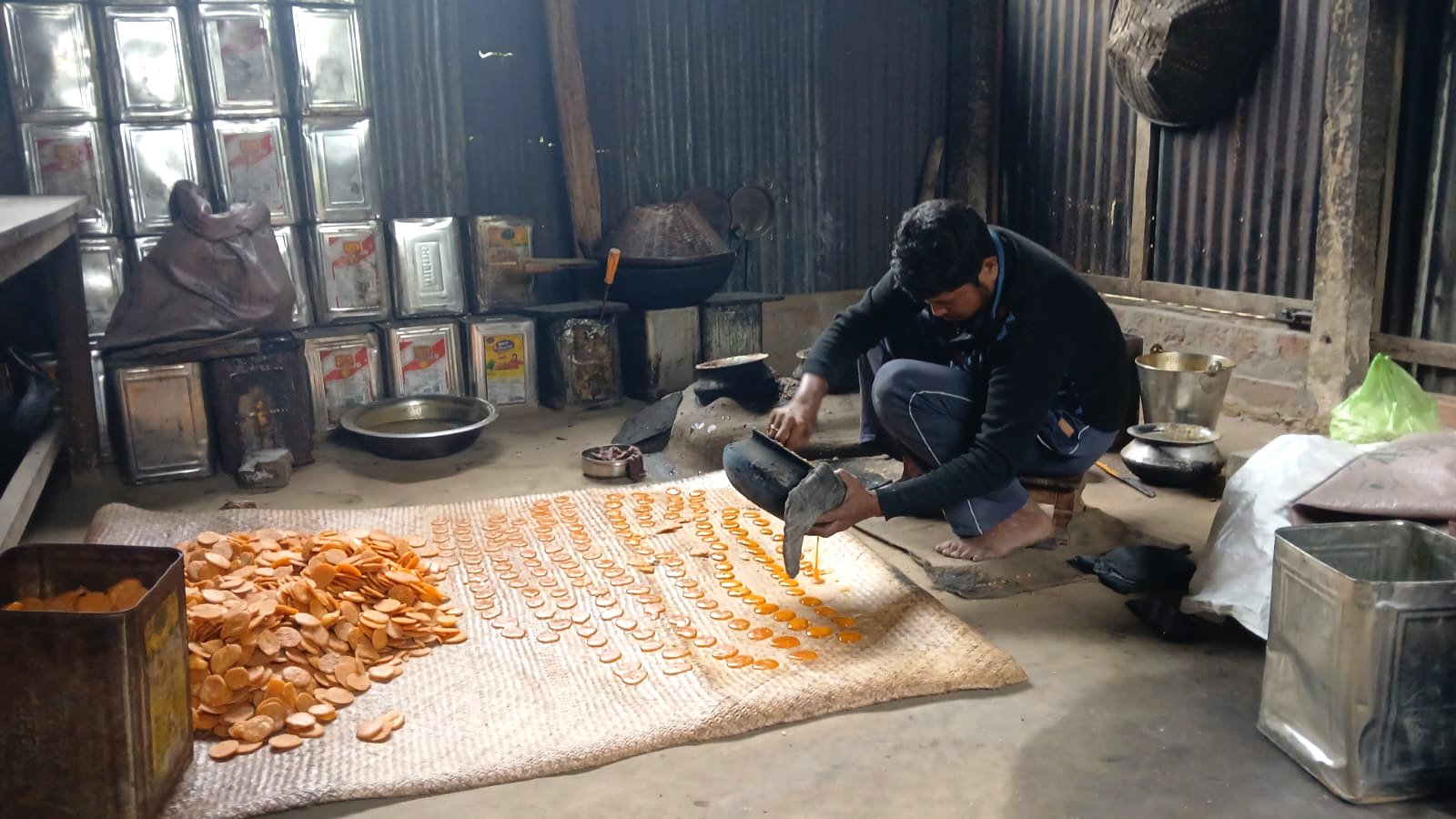
In Totabari village under Kalyanpur block of Khowai district, this tradition thrives inside a modest factory where molten sugar is transformed into sweets by skilled artisans. The unit, owned by Raju Saha, is the last surviving center of batasha production in the region. Established decades ago by his grandfather, Radhakanta Saha, the factory has sustained generations of craftsmanship.
“We work day and night during Sankranti to meet the demand,” Raju said, noting that while batasha is sold year-round, tillai is prepared almost exclusively for the festival.
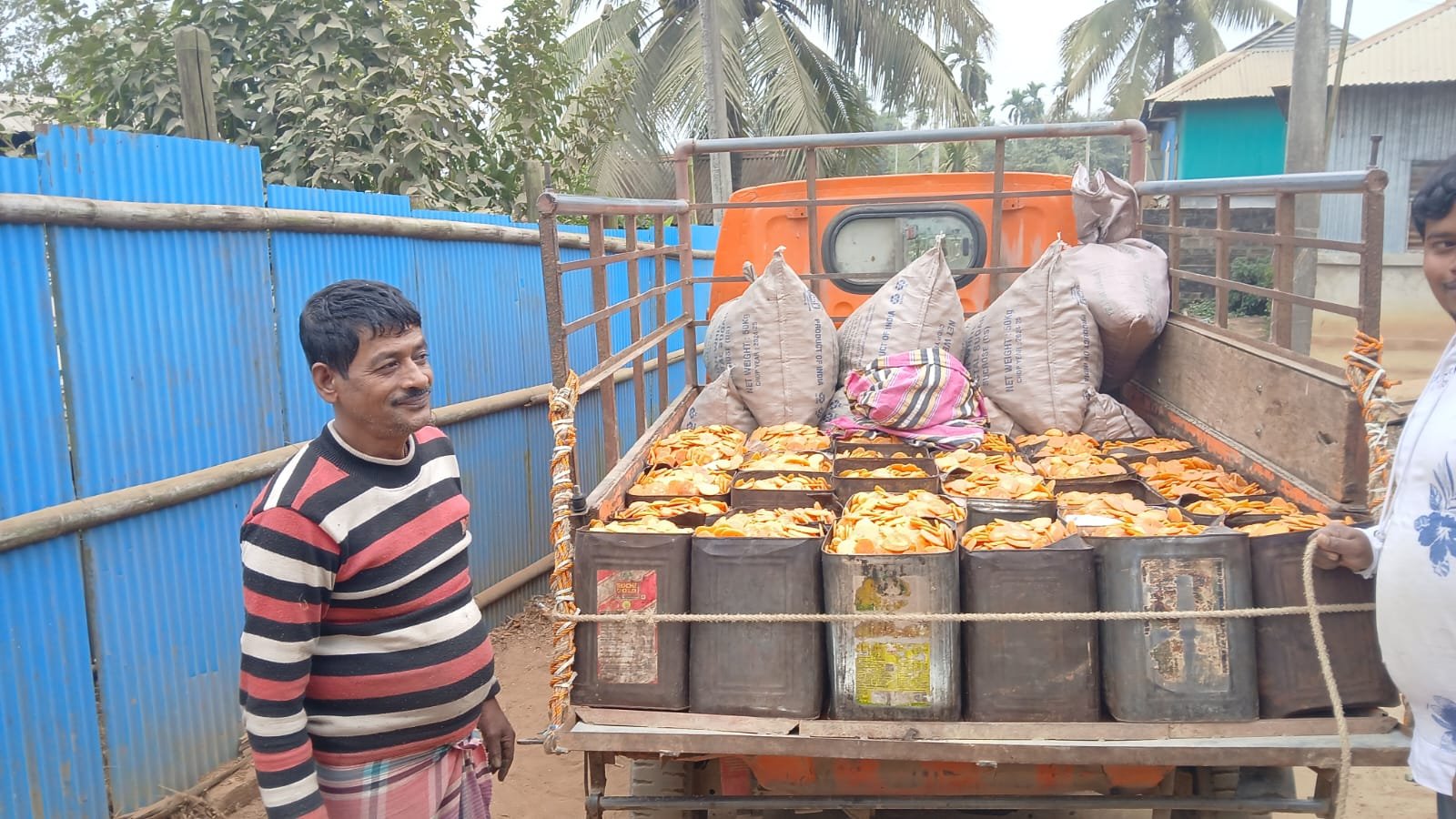
Despite its cultural significance, the trade faces mounting challenges. Younger generations show little interest in continuing the craft, leaving the factory dependent on seasonal workers during Sankranti. Rising costs have added further strain—sugar, once subsidized, must now be bought at market rates, pushing wholesale prices to ₹75 per kilogram for standard sweets and ₹85 for larger varieties.
The sweets remain integral to religious rituals, particularly harinam sankirtan and other Hindu ceremonies. Local markets in Kalyanpur and surrounding areas continue to welcome them with enthusiasm, underscoring that modern chocolates and packaged desserts cannot replace the cultural weight of tillai and batasha.
For Raju Saha, the confections symbolize more than food. “These sweets are part of our cultural soul,” he said. “To preserve them, artisans need recognition and assistance.”
As Sankranti approaches, Totabari’s small factory hums with activity, its workers shaping sugar into symbols of faith and identity. The scene is a reminder that heritage is not merely remembered—it is lived, molded, and sweetened in the hands of those who keep tradition alive.