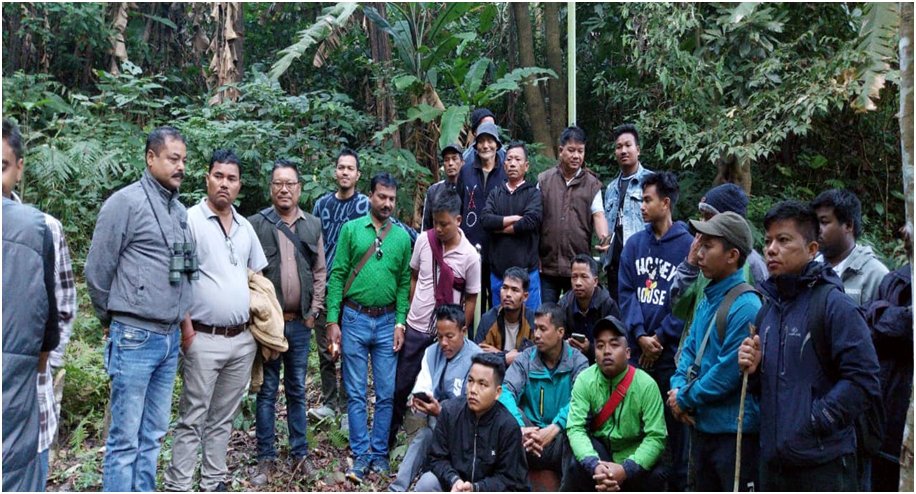
Agartala, November 28, 2025: In a major push toward strengthening community-led conservation in Tripura, a 26-member team from the IGDC–CREFLAT Project undertook an eight-day exposure visit to Nagaland’s Community Conservation Areas (CCAs) from 15 to 22 November 2025. The visit, initiated by IGDC–CREFLAT CEO and Project Director S. Prabhu, IFS, focused on understanding how Naga villages have successfully integrated biodiversity protection with livelihood development.
Nagaland’s CCAs are regarded as one of India’s strongest examples of grassroots conservation, where communities safeguard forests, wildlife and water sources for ecological, cultural and economic reasons. At Khonoma, elders responded to concerns over declining wildlife and excessive hunting by establishing a protected landscape that now functions as a “breeding centre” for fauna while preserving critical water systems.
The Tripura team—comprising Range Officers, Beat Officers, PMC and VDPIC members, technical staff and community workers, led by RO Ambassa Jagat Bahadur Debbarma—interacted with leaders in Khonoma (Kohima district) and Sendenyu (Tseminyu district). Discussions centred on community governance models, conservation committees, participatory micro-planning and the role of youth, elders and former hunters in decision-making.
A key takeaway was Nagaland’s livelihood-first approach, in which income-generating activities supported by KfW projects are introduced before strict conservation norms, ensuring villagers do not lose economic opportunities. The team also observed how SHGs and local NGOs contribute to eco-tourism, handicrafts, livestock distribution and small enterprises through training and revolving funds.
Participants noted strong parallels with Tripura’s CBCA initiatives and highlighted learnings on community consent, livelihood diversification, hunting bans through consensus, youth–elder collaboration and soil-water conservation techniques such as terrace farming.
The delegation also visited the Doyang Lake Amur Falcon site, Biodiversity Park, SHG outlets and the Dimapur Zoological Park, engaging with officials from the Nagaland Forest Department, KfW and community institutions.
The visit underscored that community ownership forms the backbone of sustainable conservation. Tripura aims to adapt these insights to strengthen its CBCA framework and build resilient forest landscapes where communities and nature benefit together.