Agartala, January 22, 2026: The Ministry of DoNER’s Joint Secretary Angshuman Dey on Thursday inaugurated a Common Facility Centre (CFC) at Tripura’s Lefunga village of West district under the PM-DevINE (Prime Minister’s Development Initiative for North East) scheme.
The North East Centre for Technology Application and Reach (NECTAR) organized this inauguration programme for the project titled “A Value Chain on Utilization of Banana Pseudo Stem for Value-Added Products” with the funding support of the Ministry of DoNER, aimed at generating sustainable livelihoods and boosting rural economies.
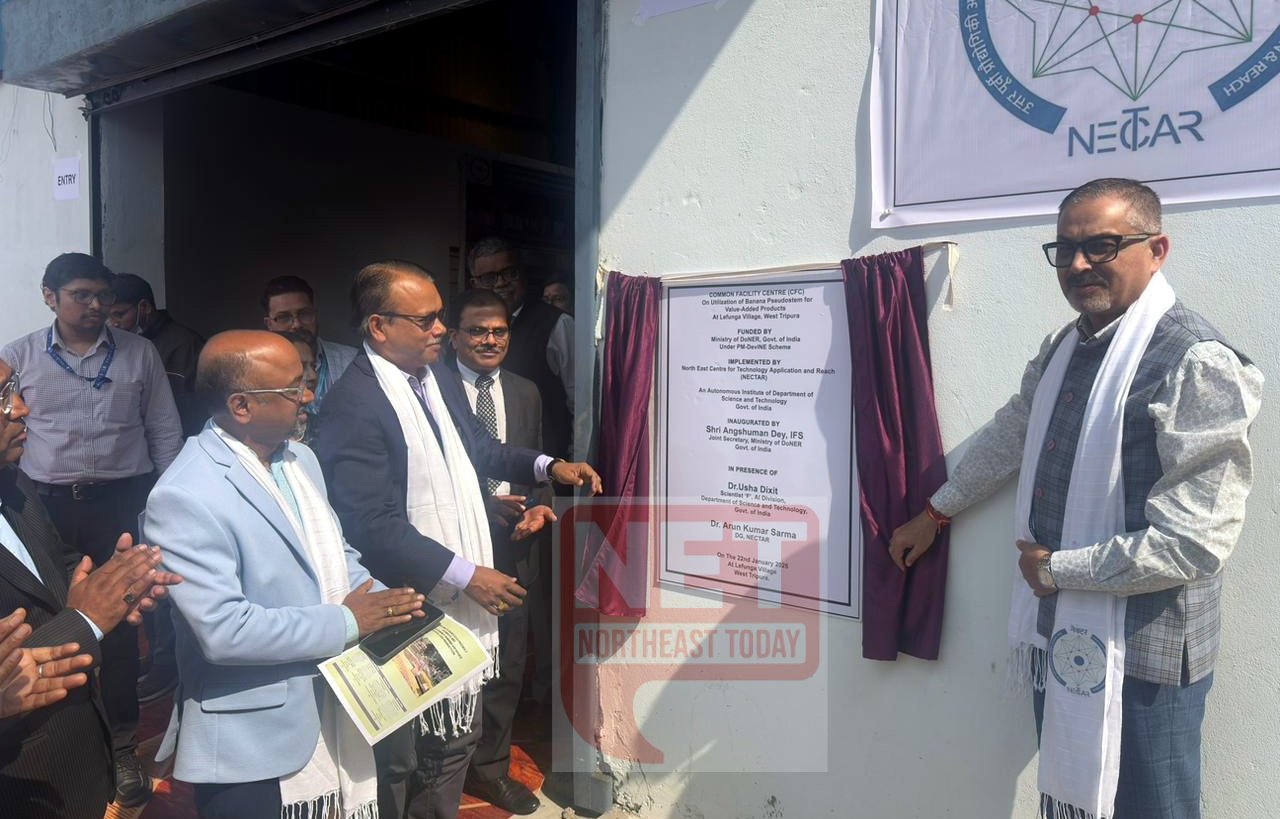
Addressing the inaugural ceremony, Joint Secretary Dey highlighted the significance of the project stating: “This is an innovative project conceptualised by NECTAR and supported and funded by the ministry of DoNER. There will actually be 12 such centres in the northeast region of India. The total cost is Rs 67 crore, with each centre requiring about Rs 5.4 crore.”
Dey emphasized that the primary focus of the scheme is employment creation rather than merely enhancing artisan earnings. Each centre will house around 20 machines, enabling direct employment for 20 individuals, while also generating indirect opportunities through related activities.
“Direct 20 people can find their employment over here and also related to this, there are other activities which create a lot of employment,” he noted.
The project seeks to utilize the entire banana plant, which is abundantly available across villages and forests in the region but often underutilized. Traditionally, banana flowers and stems are discarded, but this initiative aims to convert them into valuable products.
“This innovative thing will make it possible to use the entire plant of banana, and it will create a lot of value,” Dey explained.
With rising demand for organic fertilizers and natural farming inputs, the centres will produce liquid fertilizers and nutrients, which Dey believes hold “tremendous potential.” Additionally, the natural fibre extracted from banana plants is expected to become a trendy and sustainable material for the future, opening new avenues for rural entrepreneurship.
“Besides the demand for natural fibre, I think this is going to be one of the important, trendy things for the future. A lot of employment will be coming up,” he added.
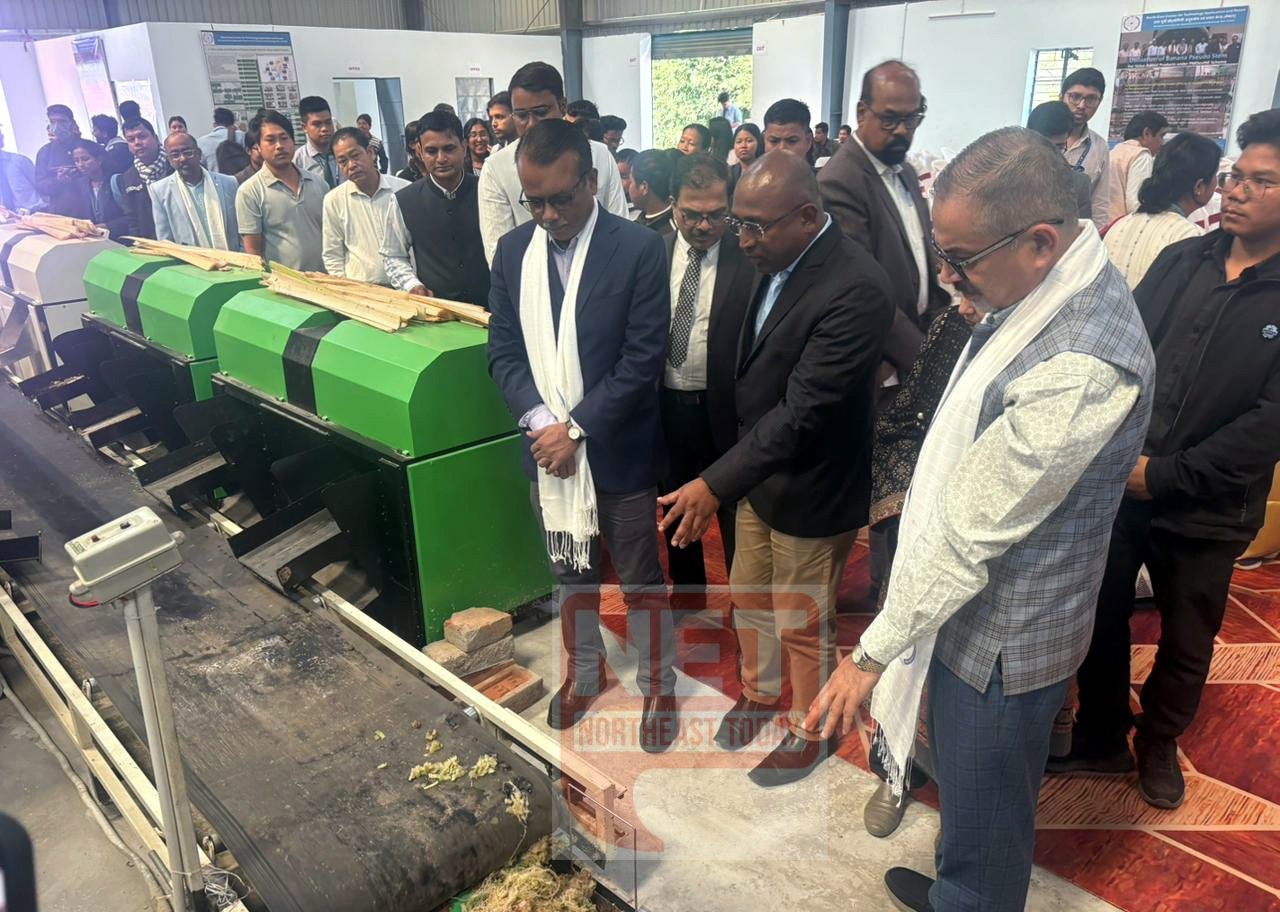
Welcoming the luminaries, villagers and students, NECTAR’s Director General Dr. Arun Kumar Sarma said the initiative will establish 12 CFCs across the Northeast, including two in Tripura. Each centre will focus on three core products banana fibre, liquid fertilizer and bio-gas with scope for local value addition. In Tripura, known for its handicrafts, NECTAR is collaborating with ICAR Kolkata to develop customized loom-making machines, while other centres will explore paper bag production and eco-friendly products from banana fibre.
Dr. Sarma highlighted the market potential, noting India’s paper bag industry is valued at USD 700 million and projected to cross USD 1 billion by 2030. The liquid fertilizer units will produce 10,000 litres every 21 days, supporting NECTAR’s organic farming project that connects 25,000 farmers across the region.
Each CFC will directly employ at least 20 people, with significant indirect opportunities in raw material supply. Dr. Sarma thanked the Ministry of DoNER and the Department of Science and Technology for supporting this ambitious project, calling it a “sustainable livelihood model for the Northeast.”
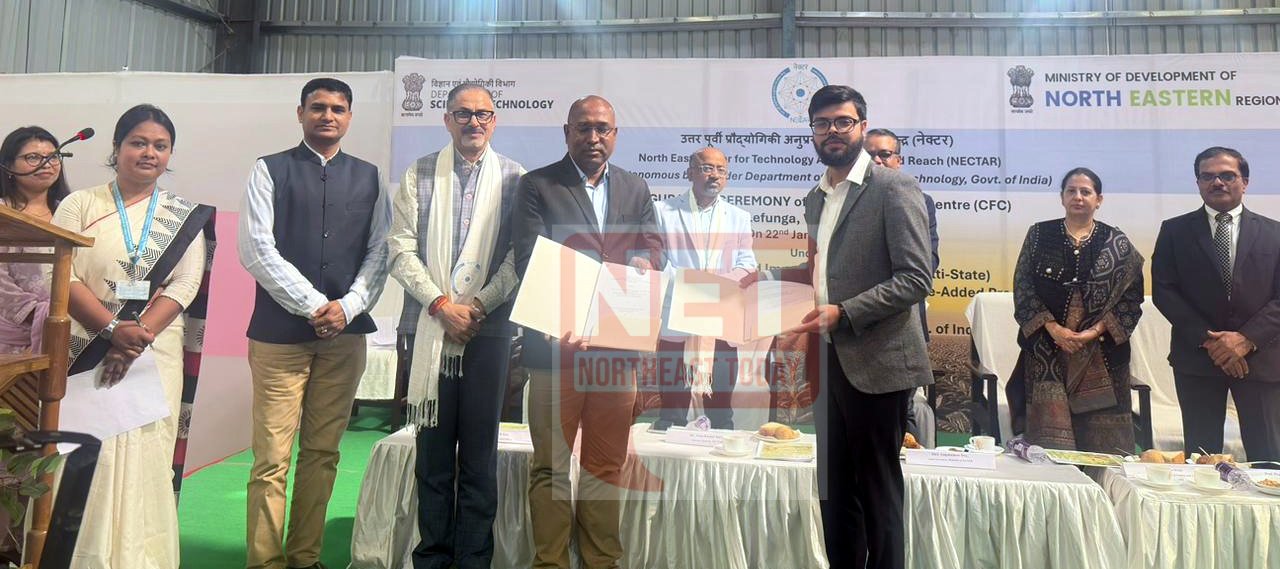
A memorandum of agreement (MoA) was signed and exchanged between NECTAR and implementing agency CTRD and handed over to CFC while soil testing kits, training material and distribution of organic certificate among five master trainers.
In this event, Dr Usha Dixit, Scientist-F, AI-Division Department of Science & Technology; Dr Prabha Sakar Shukla, Vice-Chancellor, NEHU; and Dr Debasish Sen, Principal, College of Agriculture, Agartala were present.