Agartala, May 07, 2026: In a promising example of modern floriculture transforming rural livelihoods, a farmer from South Tripura has embarked on an inspiring journey toward self-reliance through the cultivation of exotic Gerbera flowers under a government-supported initiative.
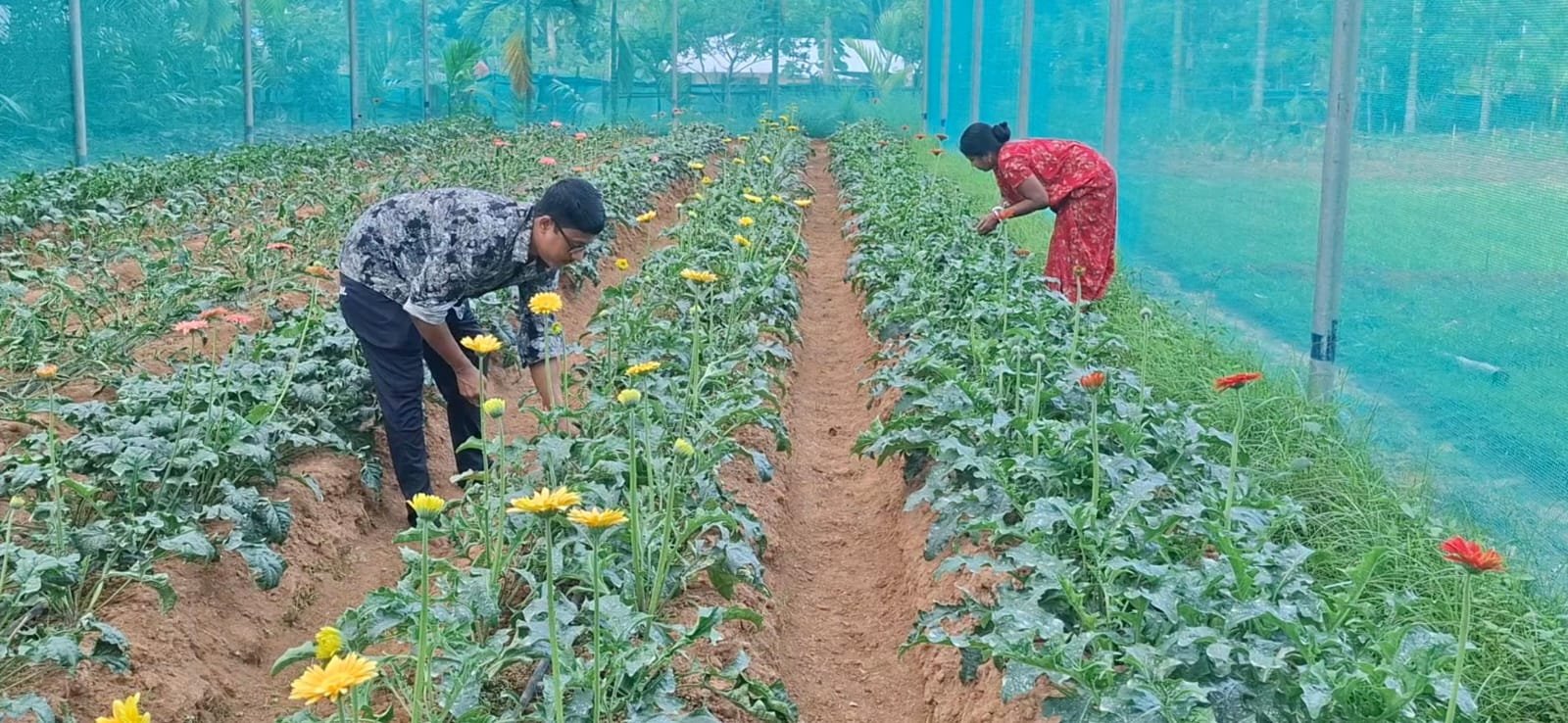
Mithun Nath, a resident of Brajendranagar under the Satchand Agricultural Subdivision in Sabroom, has started Gerbera cultivation with assistance provided under the ‘Mission for Integrated Development of Horticulture’ (MIDH) scheme for the 2024–25 financial year. The initiative aims to encourage farmers to adopt high-value horticultural practices using modern technology.
As part of the project, a protected floriculture structure covering 200 square metres has been established, where nearly 1,200 Gerbera saplings have been planted. The total estimated cost of the project is ₹3,99,281.
The project has been implemented by the Directorate of Horticulture and Soil Conservation, Government of Tripura, while the execution responsibility was entrusted to Bangalore-based Florence Flora Marketing. Construction of the modern flower cultivation unit was completed on November 20, 2025.
Officials associated with the project stated that exotic flowers such as Gerbera have significant commercial demand and fetch comparatively higher prices in the market, making them a profitable alternative source of income for farmers.
Manohar Das, Superintendent of the Satchand Agricultural Subdivision, expressed optimism that the initiative would play an important role in strengthening the economic condition of the farmer and inspire others to explore modern floriculture practices.
Local residents believe that such projects are gradually creating awareness among rural youth regarding the potential of scientific agriculture and flower cultivation. They said the combination of government assistance, technical support and market-oriented planning is opening up new opportunities for sustainable and self-reliant farming in South Tripura.
Farmer Mithun Nath and agricultural officials shared the details of the initiative with the media, highlighting it as a successful example of how innovative agricultural schemes can empower marginal farmers and diversify rural livelihoods.