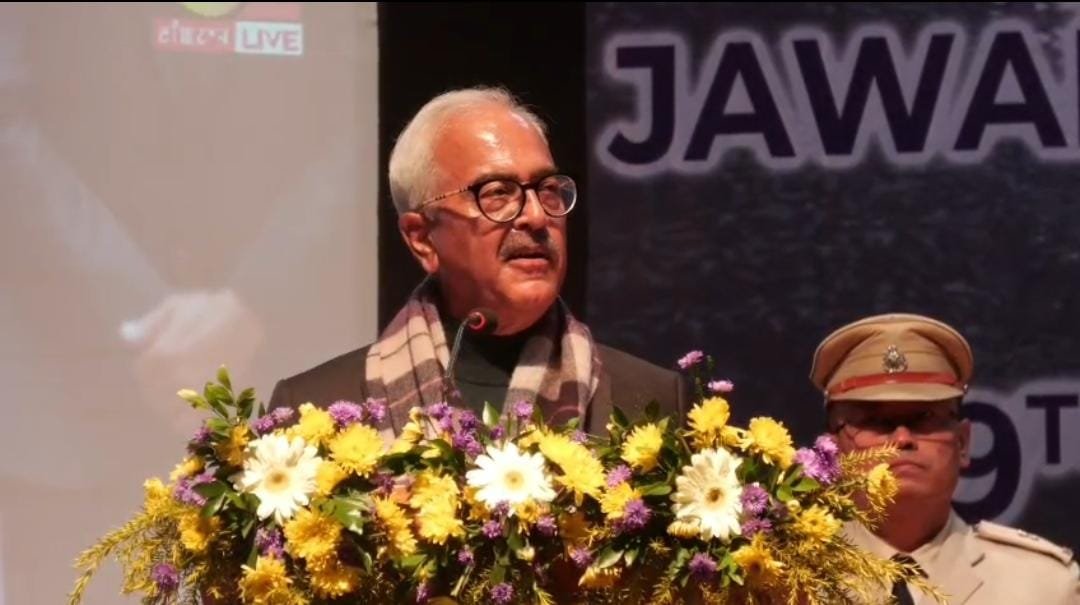
Governor of Manipur Ajay Kumar Bhalla on Thursday graced the 18th Annual Foundation Day celebration of the Jawaharlal Nehru Institute of Medical Sciences (JNIMS) at Imphal, marking eighteen years of the institute’s contribution to medical education and tertiary healthcare in the State.
Addressing the gathering, the Governor said the Foundation Day was a moment of both celebration and introspection, and noted that JNIMS has grown into one of Manipur’s premier centres for medical education and advanced healthcare services. He said the institute has played a vital role in strengthening the State’s healthcare system by producing skilled medical professionals and providing specialised treatment facilities, thereby reducing the need for patients to seek treatment outside Manipur.
Emphasising that medical education must be rooted in compassion, ethical values and commitment to community service, Bhalla said the role of a medical institution extends beyond hospitals and classrooms to research, innovation, preventive healthcare and public outreach. He expressed satisfaction over JNIMS’ active participation in national and State health programmes and called for further strengthening of research activities through the adoption of modern technology and alignment with national health priorities. He also expressed confidence that the institute would achieve greater excellence in the coming years.
As part of the programme, the Governor released the 18th Annual Report of JNIMS and the college magazine Nongin. He, along with Health and Family Welfare Commissioner-cum-Secretary Sumant Singh and JNIMS Director Prof. L. Usharani Devi, also presented awards to meritorious students.
Speaking on the occasion, Sumant Singh said the role of JNIMS has been further strengthened through its association with initiatives of the Ministry of Health and Family Welfare. He highlighted the establishment of a Multi-Disciplinary Research Unit, region-specific cancer research under the Department of Health Research, a Viral Research and Diagnostic Laboratory network under the Indian Council of Medical Research, a State Referral Laboratory for Rabies under the National Rabies Control Programme, and a 50-bedded Critical Care Block under the National Health Mission.
The function was attended by faculty members, doctors, nurses, students and staff of JNIMS, along with invited guests.