Kohima, Feb 25: Nagaland University researchers have proposed a holistic conflict mitigation approach integrating ecotourism-based measures, community participation and geospatial technology to address the rising human–tiger conflicts in Uttarakhand, particularly in the transitional buffer zones around Jim Corbett National Park.
The study highlights that increasing human–wildlife conflicts, driven by ecological degradation, climate change and expanding human activities, have intensified significantly in recent years.
The research calls for urgent and coordinated interventions combining ecological conservation, technological monitoring and active community engagement, terming them as essential to prevent further escalation of human-tiger conflicts and to ensure sustainable coexistence between humans and wildlife.
Uttarakhand, known for its rich biodiversity and high tiger population, has witnessed growing incidents of human-tiger encounters due to habitat loss, human encroachment and rising pressure on natural resources. These conflicts have resulted in loss of human life, livestock damage and widespread fear among local communities, particularly in the districts of Pauri, Almora and Nainital.
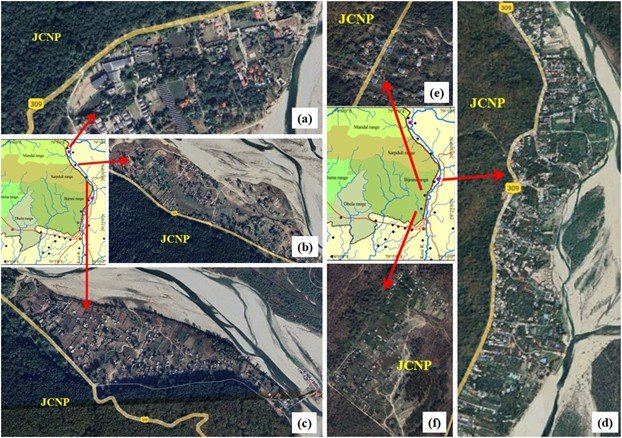
Focusing on the eastern transitional buffer zone of Jim Corbett National Park near Ramnagar and surrounding villages, the research analysed spatiotemporal trends in human-tiger conflicts over three decades (1991–2025). The researchers integrated two GIS-based modules—an ecological module and a human-tiger conflict module—to assess changes in land use, habitat area, population density, tourism pressure and conflict incidents. Based on this analysis, the study identified four categories of human-tiger conflict risk zones: low, moderate, high and very high.
Lauding the recent study conducted by university researchers identifying ecotourism as a sustainable strategy to manage human–tiger conflicts near Jim Corbett National Park, Prof. Jagadish K. Patnaik, Vice Chancellor, Nagaland University, said, “The study highlights that community-based ecotourism can reduce dependency on forest resources, enhance local livelihoods, and promote coexistence with wildlife. Such research reflects the university’s commitment to addressing critical environmental challenges through practical and community-oriented solutions.”
The findings were published in Springer’s International Journal Environmental Monitoring and Assessment (https://doi.org/10.1007/s10661-025-14936-0), an international, peer-reviewed scientific journal that publishes research on environmental monitoring systems and pollution risk assessment
The paper was co-authored by Prof. M. S. Rawat from Nagaland University, Ms. Ananya Rawat from Amity Institute of Forest and Wildlife, Amity University, Noida, and Dr. Pradeep Kumar Rawat, Department of Geography, Asian International University, Imphal.
Elaborating on the key findings, Prof. M. S. Rawat, Department of Geography, School of Sciences, Nagaland University, said, “Our study found that adverse ecological changes, including shrinking wildlife habitats, rapid demographic shifts, increasing tourist inflow beyond ecological carrying capacity and expanding infrastructure in eco-sensitive areas have contributed to a steady rise in conflict incidents. We observed that human-tiger conflicts have increased by approximately 3 per cent annually, with very high-risk zones expanding at the fastest rate.”
Emphasising the need for sustainable solutions, Research Paper co-author Dr. Pradeep Kumar Rawat, Consultant Professor, Department of Geography, Asian International University, said, “We recommend a comprehensive mitigation framework that prioritises ecotourism-based strategies in and around identified conflict hotspots. The measures we propose include community awareness campaigns in vulnerable locations, implementation of conflict risk zone mapping for planning interventions, promotion of responsible ecotourism activities for both tourists and local communities, and ecological management measures such as scientific land-use planning and protective barriers in high-risk areas.”
Further, Co-Author Ms. Ananya Rawat, M.Sc. Student of Wildlife Science (2023-2025), Amity Institute of Forestry and Wildlife, Amity University, said, “Our study underscores that ecotourism-based initiatives can help reduce conflict by generating alternative livelihoods for local communities, promoting conservation awareness and ensuring balanced development in ecologically sensitive regions. The findings also highlight the importance of habitat restoration, early warning systems and community vigilance to enable safe coexistence between humans and wildlife.”
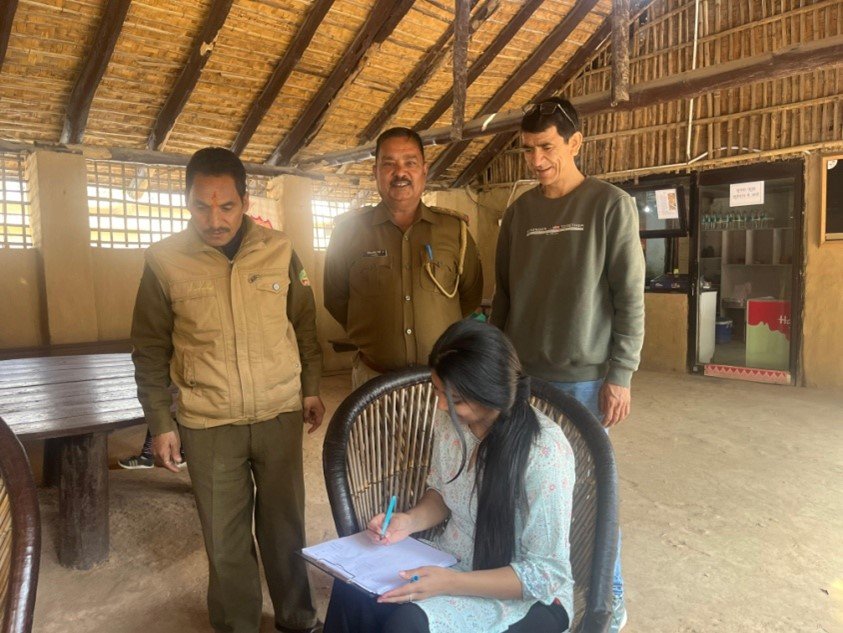
Using field surveys, interviews with victims’ families and data from forest department offices, the research developed risk zone and hotspot maps that provide valuable inputs for planners, administrators and policymakers. The study notes that unplanned urbanisation, infrastructure expansion and socio-economic pressures are key drivers of increasing human–wildlife conflicts, and addressing these factors is essential for long-term mitigation.
According to the researchers, the findings will support wildlife managers and authorities in implementing sustainable development strategies in buffer zones, strengthen conservation planning and enhance public safety. The study also calls for future research on changing wildlife behaviour and human activities, recommending that human–wildlife conflicts be addressed through coordinated approaches similar to disaster management frameworks.