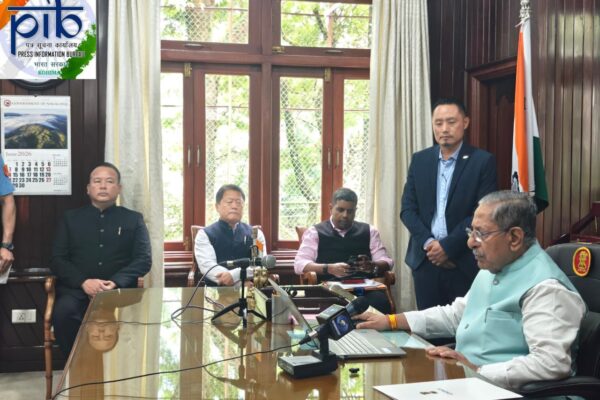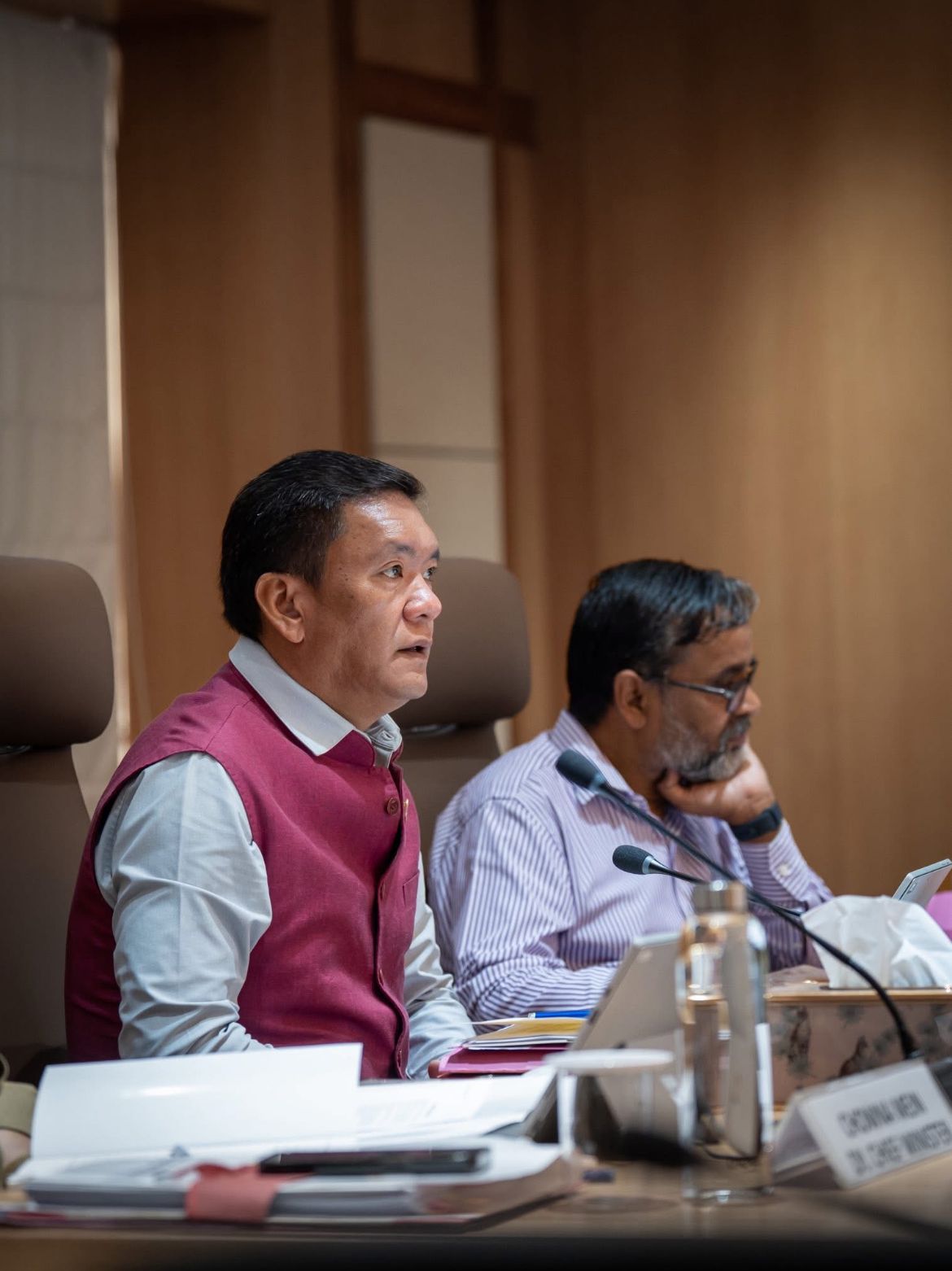
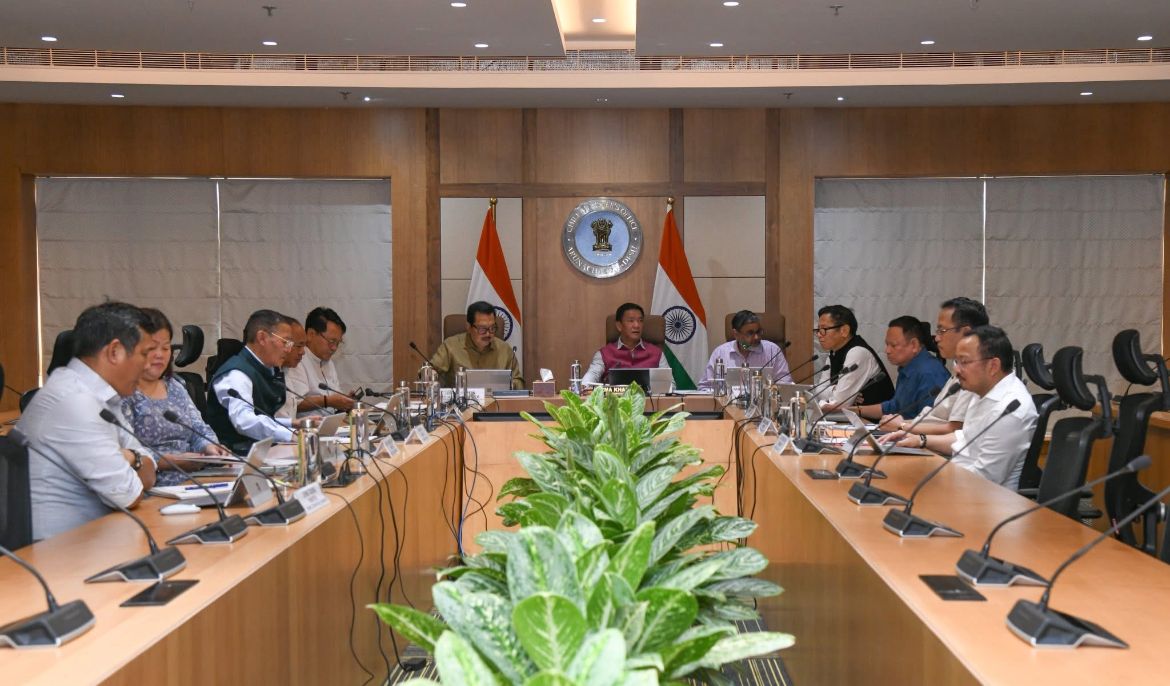
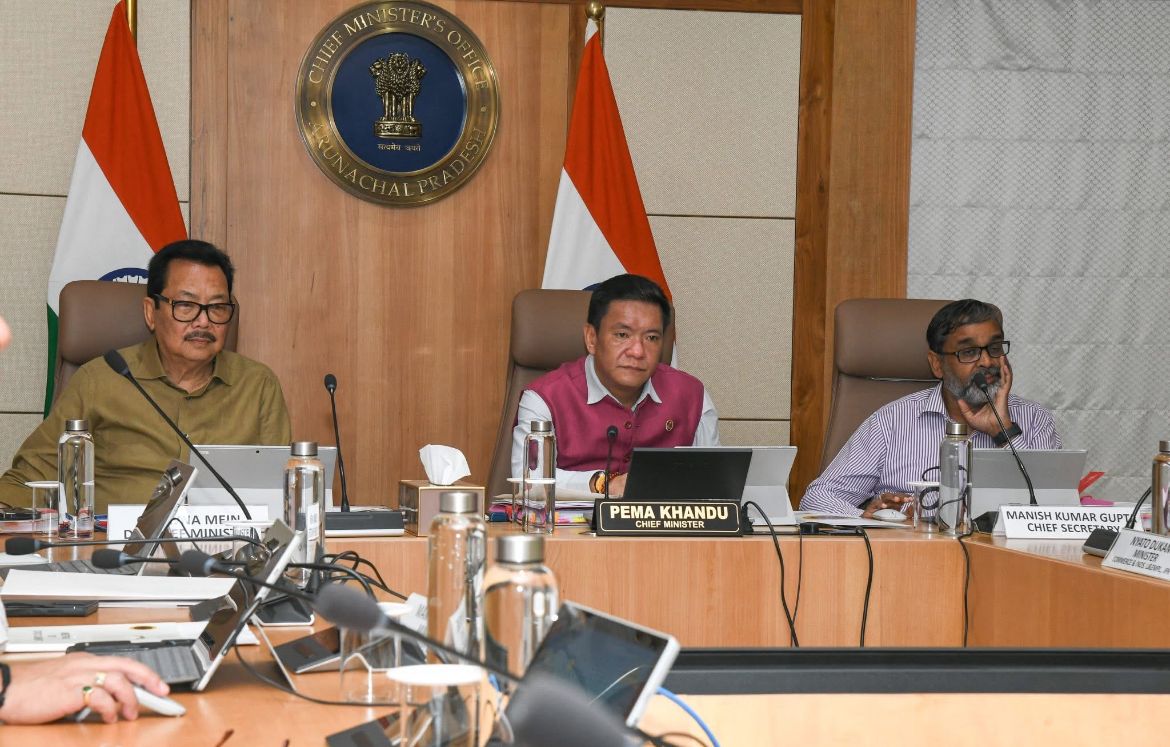
The Arunachal Pradesh Cabinet, chaired by Chief Minister Pema Khandu on Tuesday, approved a set of major policy decisions aimed at driving economic growth, improving governance, expanding employment, and strengthening public service delivery across the state.
The Cabinet cleared the Arunachal Pradesh Micro, Small and Medium Enterprises (Facilitation of Establishment and Operation) Ordinance, 2026. The ordinance will cut compliance requirements and allow eligible MSMEs to start operations through self declaration. Officials said the move will improve ease of doing business, boost entrepreneurship, attract investment, and create jobs.
Reviewing the “Shikshit Bharat to Shikshit Arunachal” Mission, the Cabinet noted that ₹3,612.50 crore was invested in Phase-I from 2023 to 2026. With ₹1,500 crore planned for Phase-II, total spending will cross ₹5,100 crore by 2029.
Key gains include school network rationalization from 2,890 to 1,885 schools, implementation of the Arunachal Pradesh Transfer and Posting Act, 2026, digital governance platforms, better CBSE results, and improved national rankings. The government reported the construction and upgradation of 50 Golden Jubilee Schools, 90 PM Shri Schools, over 120 hostels, 152 science laboratories, 159 libraries, more than 400 sanitation facilities, 300 PM Poshan kitchens, 180 staff quarters and distributed over 75,000 textbooks in ten tribal languages, alongside initiatives to strengthen Bhoti language education.
The Cabinet amended the Arunachal Pradesh Land Settlement and Records Rules, 2012. Agricultural land within notified Master Plan areas will now be automatically deemed converted to the land use specified in the Master Plan. This is expected to reduce delays for landowners and support planned urban growth.
Under the Chief Minister’s Comprehensive State Rural Road Development Programme (CM-CSRRDP), the government will build all-weather roads to all unconnected habitations with populations below 250 by 2029. The plan targets 1,129 habitations through 6,567 km of roads with an outlay of ₹2,000 crore over three years.
The Arunachal Pradesh Cooperation Policy, 2026, aligned with the National Cooperation Policy, 2025, was approved to improve digital governance, market access, and opportunities in agriculture and allied sectors.
For job aspirants, the Cabinet extended the one time upper age relaxation by one more year. This covers candidates who applied for APPSC exams advertised in 2022 but became ineligible due to delays.
Amendments to APSSB Rules, 2018 will allow serving or retired organised service officers with 20 years of service and Super Time Scale status to be appointed as APSSB Chairman. Retired appointees will serve for five years or until age 65.
The Cabinet also approved regularization of contractual services of erstwhile RMSA Trained Graduate Teachers against 74 vacancies through a Departmental Promotion Committee, offering job security to eligible teachers.
With a focus on inclusive education and capacity building, the government has appointed 150 Special Education Teachers and trained more than 7,000 stakeholders in the education sector.
The tenure of the Arunachal Pradesh Administrative Reforms Commission was extended by six months. Divisional Commissioners will be added as ex-officio members and the Member Secretary post will be upgraded. Recruitment rules for Aviation Officers and Horticulture Department posts were also amended to improve manpower and service delivery.
The Aalo West Division of PWD will be created by re designating an existing establishment, aiming to speed up project execution without added cost.
Labour rules were amended to align with the Occupational Safety, Health and Working Conditions Code, 2020.