The Government of Arunachal Pradesh and NITI Aayog are advancing plans to set up the Institute for Transforming Arunachal Pradesh, a proposed state level policy think tank designed to anchor research driven governance and long term development strategy for the state.
The concept for ITA emerged from a series of consultations between NITI Aayog and state officials, aimed at creating a dedicated institutional framework to guide planning across Arunachal’s priority sectors. The institute is expected to focus on hydropower, road and digital connectivity, tourism, agriculture, and youth empowerment areas where the state holds significant untapped potential but faces complex geographical and logistical challenges.
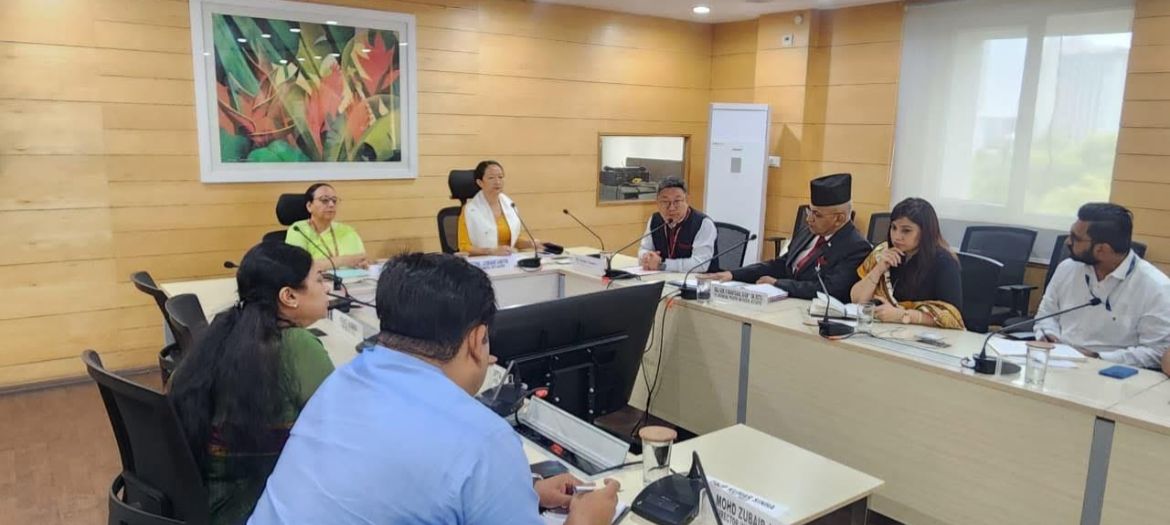
Chief Minister Pema Khandu said the state has for years felt the absence of a specialized body that could provide strategic direction and evidence based policy inputs suited to Arunachal’s distinct terrain, cultural diversity, and economic structure. “I am deeply encouraged that the vision for establishing ITA is steadily taking shape through the proactive engagement of NITI Aayog and the Government of Arunachal Pradesh,” Khandu said.
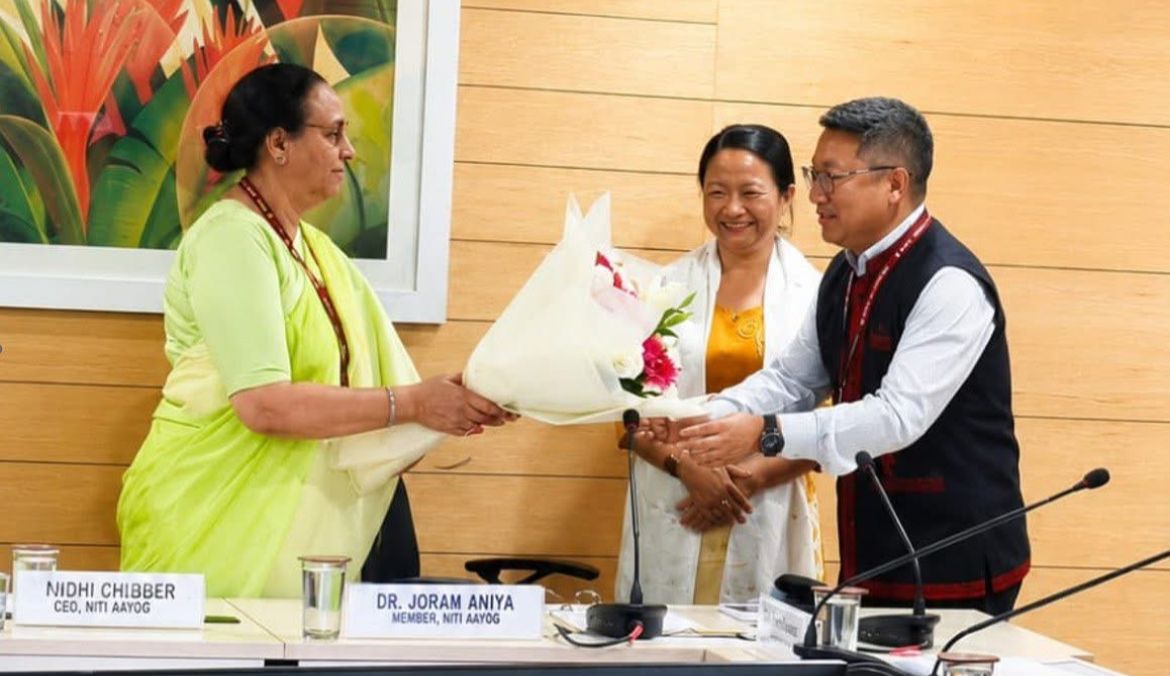
He emphasized that a state specific think tank would help bridge the gap between central policy frameworks and on ground realities, enabling development planning that reflects local aspirations while aligning with national goals. Khandu thanked NITI Aayog Member Dr. Joram Aniya, CEO Nidhi Chhibber, and other officials for their commitment to the state’s developmental journey.
Deputy Chief Minister Chowna Mein said Arunachal’s potential in hydropower generation, organic agriculture, border tourism, and skilled youth remains underleveraged due to the lack of sustained policy research and cross sectoral planning. He said ITA would be positioned to drive innovative strategies, strengthen data systems, and support departments with technical expertise for project design and monitoring.
Mein acknowledged NITI Aayog’s initiative in moving the proposal forward through “meaningful consultations and collaborative engagement” with the state. He extended “sincere appreciation” to Chhibber, Dr. Aniya, and officials involved in the initiative for their support toward what he described as Arunachal’s “transformational and inclusive developmental journey.”
Once operational, ITA is expected to function as an autonomous knowledge institution under the state government, with linkages to national and international research bodies and emphasize climate resilience, tribal development models, and border area economics.