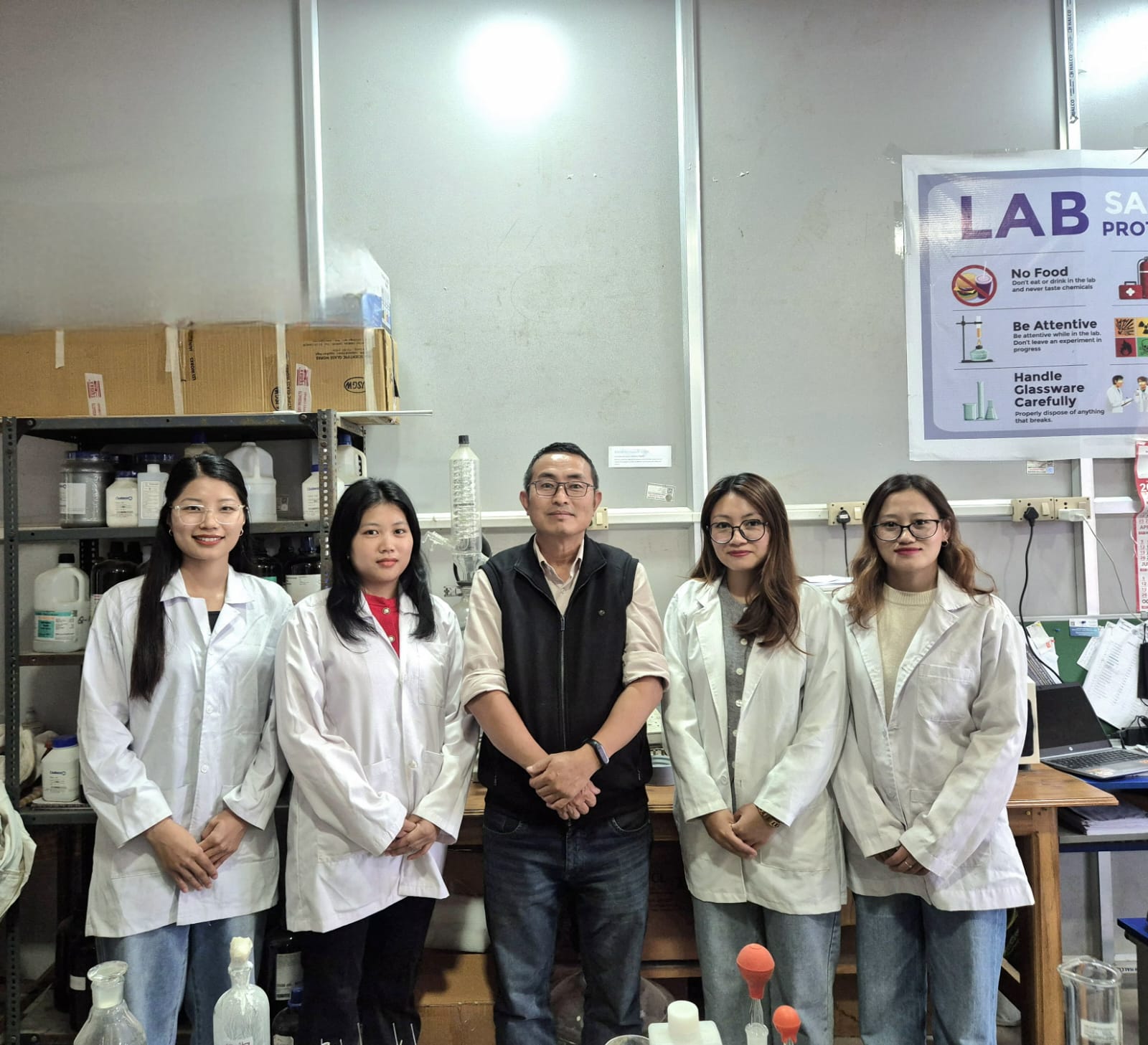
LUMAMI, NAGALAND, April 20, 2026 — A research team led by Nagaland University, in collaboration with Fazl Ali College, Mokokchung, has successfully converted one of the state’s most problematic invasive plants, Mikania micrantha, into a powerful tool for pharmaceutical innovation and sustainable manufacturing.
The study demonstrates how leaf extracts of the weed can be used to synthesize highly stable silver nanoparticles through a green chemistry approach, eliminating the need for toxic industrial chemicals. These nanoparticles act as ultra-fast catalysts, producing essential drug components known as imidazoles within seconds. Imidazoles are widely used across therapeutic areas, making the discovery a significant step toward eco-friendly drug manufacturing.
Supported by the Anusandhan National Research Foundation (ANRF) and the National Fellowship for Scheduled Tribe Students (NFSTMOTA), the research was published in Biochemical and Biophysical Research Communications. The paper was co-authored by Manthae C. Phom, Phitovili Sumi, Betokali K. Zhimomi, Khonzani Yanthan, Tonge W W, Shokip Tumtin, and Tovishe Phucho.
The nanoparticles not only accelerate drug synthesis but also exhibit strong antibacterial activity against pathogens such as Staphylococcus aureus and Yersinia pestis. In addition, lab tests revealed significant anticancer potential, reducing colon cancer cell viability at nearly twice the potency of the plant extract alone. Their natural plant-derived coating ensures stability even at high temperatures, making them suitable for industrial and biomedical applications.
Commending the team, Prof. Jagadish K. Patnaik, Vice Chancellor of Nagaland University, said the study underscores the institution’s commitment to scientific excellence and sustainable solutions for global health challenges. Dr. I. Tovishe Phucho, Associate Professor at Nagaland University, emphasized that many more local plants hold similar potential, provided adequate funding supports further research.
By transforming an ecological challenge into a scientific opportunity, the study highlights how Nagaland’s biodiversity can drive globally relevant innovations in healthcare and green industry.