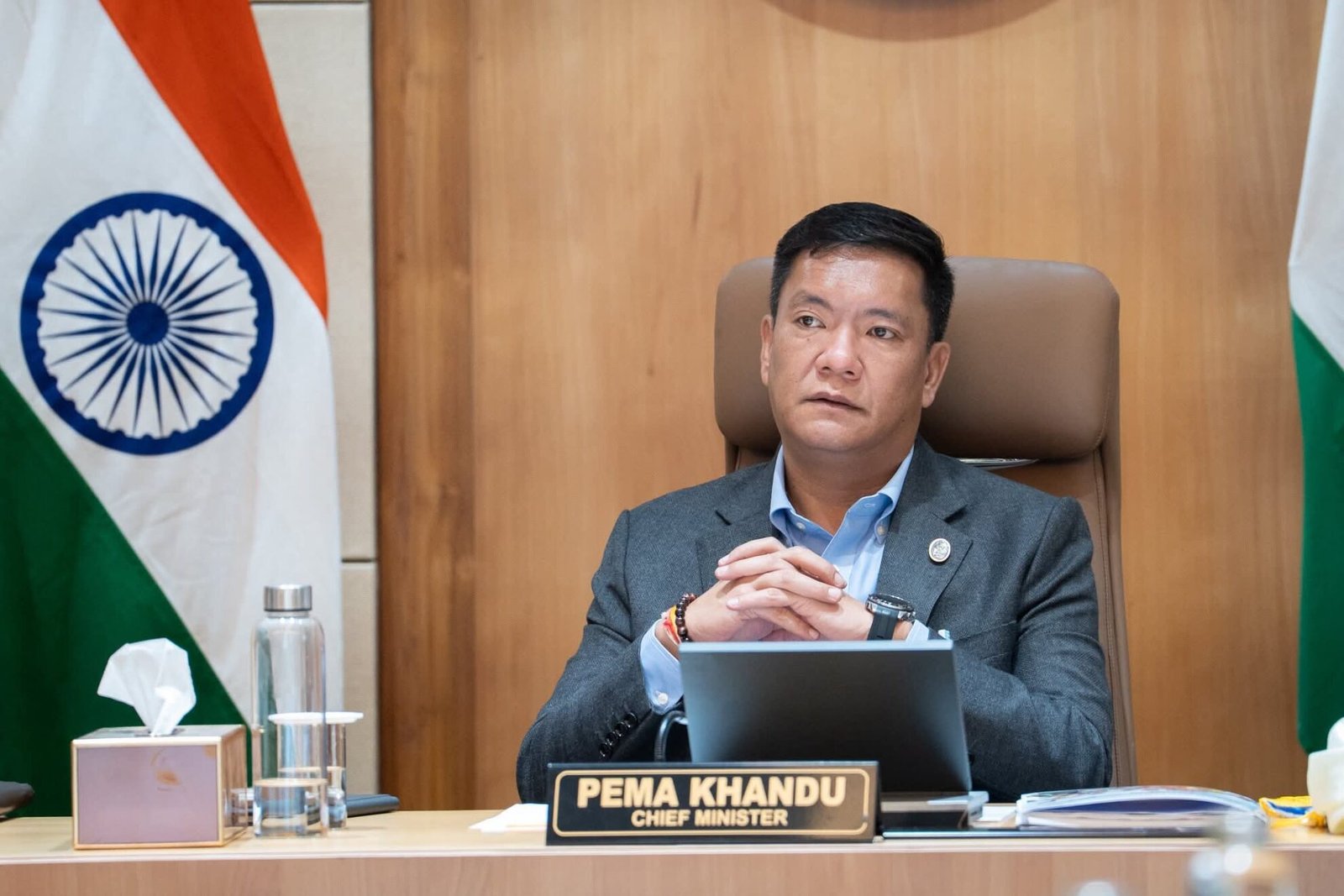
Arunachal Pradesh Chief Minister Pema Khandu on Friday emphasized the state’s growing role in India’s development, describing it as a “powerhouse of hydroelectricity” and highlighting how improved connectivity and infrastructure have accelerated growth in tourism, agriculture, and horticulture.
Speaking at the ICPP Growth Conference 2026 hosted by the Isaac Centre for Public Policy at Ashoka University in New Delhi, Khandu noted that hydropower projects with a cumulative capacity of nearly 19,000 MW are under various stages of development, with a long-term goal of reaching 40,000 MW by 2047. He said this expansion would significantly contribute to the vision of a developed India.
The chief minister attributed the rapid growth in tourism and agriculture to the expansion of road networks, which have opened access to remote and border areas, creating new avenues for economic activity. He described Arunachal Pradesh as one of India’s most beautiful and strategically important states, being the largest in the northeast and the easternmost and northernmost in the region.
Khandu emphasized the state’s cultural diversity, with 26 major tribes and over 100 sub-tribes, noting that Hindi serves as a vital language link across communities. He said the northeast, once viewed through the lens of insurgency and isolation, has undergone a remarkable transformation in the past decade, crediting Prime Minister Narendra Modi’s leadership for placing the region at the center of India’s development agenda.
He pointed to regular visits by Union ministers and senior officials as crucial in identifying ground-level issues and ensuring timely resolution. Governance reforms, particularly in recruitment transparency, and a comprehensive overhaul of the education system aligned with the National Education Policy 2020 were also highlighted. Khandu said rationalizing over 600 non-viable schools was a difficult but necessary step to improve outcomes, with full NEP implementation targeted by 2030.
The chief minister reaffirmed Arunachal Pradesh’s commitment to environmental sustainability, citing structured strategies to balance economic growth with conservation in line with India’s COP26 commitments. He stressed community participation in preserving forests and biodiversity. National initiatives such as the Vibrant Villages Programme, highway expansion, and hydropower development, he added, are helping build stronger, more connected communities in the frontier state.
“When we invest in people and create opportunities, we move forward together,” Khandu said.